
Dallas Tenant Improvement Glass & Commercial Glazing Contractors
Dallas Tenant Improvement Glass, Commercial Glazing Contractors & Office Build Outs
Dallas tenant improvement construction creates one of the strongest commercial glazing markets in Texas. Corporate office renovations, headquarters relocations, medical suites, restaurants, retail stores, financial offices, hospitality properties, industrial facilities, and commercial building repositioning projects can require glass from the exterior storefront through the deepest portions of the tenant space.
The Dallas-Fort Worth market supports everything from interior TI specialists to major architectural glazing contractors. Local firms specifically advertise interior finish-outs, tenant-improvement storefronts, office partitions, conference rooms, entrances, specialty glass, curtain wall, and commercial remodeling.
For Dallas general contractors, developers, architects, property managers, facility managers, and commercial building owners, glazing decisions can begin before demolition:
Existing Glass → Reuse → TI Design → Office Glass → Storefront & Entrances → Fabrication → Installation
Dallas Commercial Glass for Tenant Improvement Construction
A Dallas commercial TI glazing package can include:
- Interior office glass
- Conference-room glazing
- Glass office fronts
- Aluminum storefront
- Commercial entrance doors
- Glass sidelites
- Frameless partitions
- Insulated glass
- Mirrors
- Privacy glass
- Decorative glass
- Security glazing
- Curtain wall modifications
This is a well-established part of the DFW construction market. Southwest Glass, Inc, for example, works across core-and-shell and interior finish-out glazing, while ALUMIN LLC specifically handles interior glass for tenant finish-outs alongside storefronts, entrances, and curtain wall.
That distinction matters because the glazing subcontractor may be involved in both the exterior building system and the finished commercial interior.
Existing Glass Before Dallas TI Demolition
Second-generation Dallas office spaces can contain substantial existing glazing.
Before demolition begins, it can be worth documenting:
- ✓ Conference rooms
- ✓ Glass offices
- ✓ Sidelites
- ✓ Glass doors
- ✓ Interior storefront systems
- ✓ Reception glazing
- ✓ Mirrors
- ✓ Exterior storefront
A previous corporate tenant may have invested heavily in architectural glass only a few years earlier.
The incoming tenant may want a different floor plan, but that does not automatically make all of the existing glass worthless.
Reusing Glass During Dallas Office Build Outs
Tempered architectural glass creates an interesting tenant-improvement problem.
Once fabricated and tempered, panels generally cannot simply be field-cut into entirely different sizes.
Reuse therefore needs to be considered before demolition.
A practical sequence can be:
Inventory Existing Glass → Document Dimensions → Compare With New TI Plans → Identify Practical Reuse → Fabricate New Panels Where Required
The new tenant should not compromise its entire layout just to preserve old glass.
But if several conference rooms, office fronts, or doors can naturally accommodate existing panels, those components may represent useful construction value.
Dallas Office Tenant Improvement Glass
Dallas office renovations are particularly strong applications for interior architectural glazing.
Glass can be used around:
- Executive offices
- Private offices
- Conference rooms
- Huddle rooms
- Training rooms
- Reception areas
- Collaboration spaces
- Break areas
- Interior entrances
One major objective is moving daylight deeper into the floor plate.
A traditional office layout can create:
Exterior Windows → Opaque Perimeter Offices → Darker Interior
Glass creates another possibility:
Exterior Windows → Glass Perimeter Offices → Interior Workspace
That can help reposition an older Dallas office suite without requiring changes to the exterior façade.
Dallas Conference Room Glass Contractors
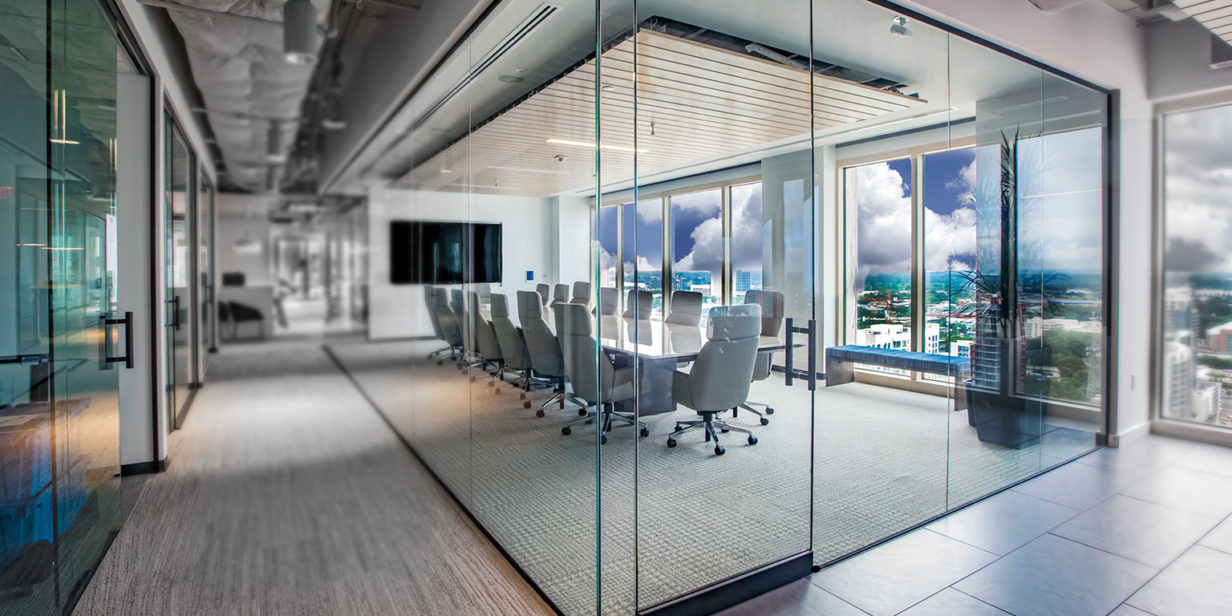
Conference rooms can represent one of the largest interior glazing scopes within a corporate TI.
The complete system may involve:
Fixed Glass + Framing + Glass Door + Hardware + Privacy + Acoustic Performance
Each element matters.
A glass conference room can look impressive while performing poorly if conversations are easily heard by surrounding employees.
Acoustic performance can be influenced by:
- Glass thickness
- Laminated configurations
- Framing
- Perimeter seals
- Door seals
- Ceiling conditions
- Adjacent partitions
Acoustic expectations should be established before the glazing system is selected.
Frameless vs. Framed Office Glass
Dallas office build outs can use several approaches.
Frameless glass provides a clean, minimal architectural appearance.
Framed office glass creates more defined openings and can integrate effectively with certain hardware and acoustic strategies.
Demountable glass systems can offer another option for corporate tenants expecting future reconfiguration.
The correct system depends on budget, aesthetics, privacy, acoustics, hardware, and the expected lifecycle of the tenant space.
Interior Glass for High-End Dallas Tenant Finish-Outs
Dallas also has contractors oriented specifically toward higher-end interior tenant finish work.
For example, Gibraltar Glass is locally positioned around commercial interior glass and high-end tenant finishes, while Crystalia Glass provides glass partition and door systems oriented toward modern office interiors.
That creates an important distinction for TI contractors.
Interior architectural glass is its own specialty within the larger commercial glazing market.
A contractor primarily structured around large exterior curtain-wall packages may represent a very different type of subcontractor from one focused heavily on conference rooms, glass offices, doors, and interior finish work.

Dallas Storefront Tenant Improvements
Ground-floor Dallas tenant improvements frequently inherit existing storefront systems.
These can occur in:
- Retail centers
- Restaurants
- Medical offices
- Banks
- Fitness centers
- Mixed-use properties
- Ground-floor offices
Before complete replacement is specified, the glazing contractor can evaluate:
Framing → Glass → Entrance → Hardware → Weather Seals → Perimeter Conditions → Accessibility
The objective is to understand whether the existing storefront remains an asset or has become a liability.
Storefront Repair vs. Replacement During a Dallas Build Out
A $1 million interior renovation does not automatically require a new storefront.
An existing commercial storefront may still be modernized through:
- Broken glass replacement
- Failed IGU replacement
- Entrance repair
- New closers
- New pivots or hinges
- Hardware upgrades
- Weather-seal replacement
- Perimeter resealing
- Architectural film
Complete replacement becomes more appropriate when problems affect the broader system.
That can include deteriorated framing, widespread glass failure, major entrance relocation, chronic leakage, accessibility issues, security requirements, or a completely different architectural concept.
Dallas Commercial Storefront Contractors
DFW has substantial storefront contractor capacity.
DFW Glazing installs commercial storefront systems, aluminum windows and doors, automatic sliding doors, and all-glass entrances.
Country Glass & Mirror, Inc. operates across broader commercial glazing and architectural-glass scopes, including storefront, curtain wall, entrances, and ongoing service.
Trinity Glazing Contractors is another Dallas-based commercial glazing contractor working with aluminum storefronts, doors, hardware, interior glass, and related systems.
The Dallas market therefore gives GCs access to different glazing subcontractors depending on the size and complexity of the tenant improvement.

Commercial Entrance Systems
Entrance systems deserve separate attention during a TI because they combine multiple building systems.
A Dallas commercial entrance can involve:
- Aluminum doors
- All-glass doors
- Sidelites
- Transoms
- Closers
- Pivots
- Continuous hinges
- Panic hardware
- Automatic operators
- Electrified hardware
The entrance is not simply another glazed opening.
It is a moving component that may operate thousands of times while simultaneously addressing accessibility, security, weather protection, and customer circulation.
Access Control and Glass Entrances
Modern Dallas office build outs frequently introduce electronic access control.
That creates an important coordination chain:
Glazing Contractor → TI Contractor → Hardware Supplier → Electrician → Security Integrator
The opening may require:
- Card readers
- Electric strikes
- Magnetic locks
- Door-position switches
- Request-to-exit devices
- Automatic operators
Those requirements should be established before doors and frames are fabricated.
This becomes particularly important when the project intends to retain an existing entrance while substantially upgrading its access-control system.
Dallas Retail Tenant Improvement Glazing
Retail glazing begins with visibility.
The architectural sequence becomes:
Exterior Traffic → Storefront → Merchandise → Entrance → Sales Floor
An incoming tenant may want to increase transparency, relocate an entrance, remove old film, enlarge display areas, or improve security.
The storefront should therefore be considered alongside merchandising and interior space planning.
Dallas Restaurant Build Out Glass
Restaurant TI projects use commercial glass differently.
The package can include:
- Exterior storefront
- Entrance doors
- Vestibules
- Private dining rooms
- Wine rooms
- Interior glass partitions
- Bar mirrors
- Patio glazing
- Operable glass
DFW storefront contractors also work extensively in restaurant environments. Commercial Storefronts Windows & Doors, for example, shows restaurant and retail applications and provides storefront, entrance, folding-door, and specialized commercial-window systems.
A former retail storefront can become especially valuable when converted into a restaurant because the glazing allows customers outside to see activity inside.
Dallas Medical Office Tenant Improvement Glass
Healthcare and medical office renovations create a different balance between daylight, visibility, and privacy.
Glass can be used around:
- Reception
- Administrative offices
- Conference rooms
- Staff areas
- Interior entrances
- Selected consultation spaces
Privacy film or specialized glazing can allow daylight to continue through the suite without leaving sensitive environments completely exposed.
Bank & Financial Office TI Glazing
Dallas bank and financial tenant improvements may introduce additional security requirements.
Glass can appear around:
- Exterior storefronts
- Controlled entrances
- Consultation offices
- Transaction areas
- Employee-controlled spaces
Protective glazing should be considered as an assembly:
Glass + Framing + Anchoring + Doors + Hardware
rather than assuming a stronger piece of glass automatically creates a secure opening.
Fitness Center Build Out Glass
Fitness tenant improvements can combine several glass scopes within one project:
Storefront + Entrance + Interior Studio Glass + Office Glass + Mirrors + Shower Glass
Mirror packages deserve early coordination.
Electrical outlets, equipment, wall-mounted systems, backing, base conditions, and architectural features can all affect large-format mirror installations.
Dallas Industrial & Warehouse Office Build Outs
DFW’s enormous industrial and logistics footprint creates another significant TI glazing application.
Warehouse and distribution facility build outs can require:
- Interior office storefront
- Glass offices
- Conference rooms
- Reception glazing
- Employee entrances
- Exterior storefront
- Safety glazing
Interior glass can separate warehouse operations from administrative offices while preserving visibility between the two environments.
Dallas Commercial Building Repositioning
Glazing can also become part of a larger property repositioning strategy.
An older Dallas office or commercial building may have good fundamentals but dated:
- Storefront systems
- Entrances
- Lobby glazing
- Insulated glass
- Interior office fronts
Ownership can prioritize the portions of the property prospective tenants experience first:
Exterior → Entrance → Lobby → Available Suite → Interior Glass
That connects commercial glazing directly to leasing and future tenant improvements.
Failed Insulated Glass During Dallas Renovations
A completely renovated tenant space can still appear neglected when the exterior glazing contains failed insulated units.
Typical indications include fogging, cloudiness, condensation between panes, and inconsistent exterior appearance.
If the framing remains serviceable, individual insulated units may be replaceable without removing the complete storefront.
That creates an important value-engineering option:
Retain Framing + Replace Failed Glass + Repair Entrances + Reseal
instead of automatically replacing the complete system.
Privacy Film and Existing Office Glass
Existing clear glass may remain perfectly usable while providing too little privacy for the incoming tenant.
Architectural film can potentially provide:
- ✓ Conference-room privacy
- ✓ Executive-office screening
- ✓ Corporate branding
- ✓ Decorative patterns
- ✓ Safety manifestations
- ✓ Department identification
That can allow substantial existing glazing to remain part of the new Dallas tenant improvement.
Dallas Commercial Glass Fabrication & TI Scheduling
Commercial glazing creates an unusual scheduling challenge.
It may be installed late, but it needs to be coordinated early.
A simplified sequence is:
Framing → Drywall → Finished Openings → Field Verification → Glass Fabrication → Installation → Hardware Adjustment
If the openings are late, measurements are late.
If measurements are late, fabrication begins late.
If fabrication begins late, glass can suddenly become one of the final obstacles between the GC and tenant occupancy.
The critical question is therefore not simply:
“When will the glass be installed?”
It is:
“When can the glass package be released?”
Flooring and Glass Coordination
Interior glass doors and partitions may depend on:
- Finished floor elevation
- Flooring thickness
- Thresholds
- Bottom channels
- Floor closers
- Material transitions
Late flooring changes can affect door clearances and fabricated dimensions.
The glazing contractor should have accurate finish information before critical panels are released.
Ceiling and Full-Height Glass Coordination
Full-height office glazing can interact with:
- Ceiling grids
- Headers
- Structural support
- Deflection conditions
- Lighting
- Sprinklers
- Mechanical systems
This creates one of the central rules of commercial TI glazing:
Glass may be installed late. It should not be designed late.
Occupied Dallas Tenant Improvement Projects
Many Dallas renovations occur inside occupied office buildings or active commercial properties.
Glazing work may need to be phased through:
- ✓ After-hours installation
- ✓ Weekend work
- ✓ Floor-by-floor construction
- ✓ Temporary entrances
- ✓ Phased storefront replacement
- ✓ Temporary board-up
- ✓ Protected tenant circulation
Exterior storefront work requires particularly careful sequencing because removing glazing can temporarily affect both building security and weather protection.
Different Types of Dallas Commercial Glazing Contractors
Dallas has a deep glazing subcontractor market, but the companies are not interchangeable.
Haley-Greer Inc is oriented toward larger commercial curtain wall, specialty metal, and architectural glazing.
Vision Enclosure Walls, Inc. focuses heavily on engineered building-envelope and façade systems.
Harmon Inc represents another large-project architectural glazing option in the DFW market.
By comparison, contractors focused on interior finish-outs, storefront renovations, doors, office glass, and smaller commercial projects may be better aligned with conventional tenant improvements.
The correct subcontractor depends heavily on the glazing package.
Dallas TI Glazing Contractors Working With General Contractors
One of the clearest examples of the TI-focused segment is Mister Glass, which specifically markets to Dallas-area general contractors for storefront, curtain wall, interior partitions, conference rooms, and tenant-improvement installations.
Similarly, Universal Glass Company describes both exterior architectural glazing and interior finish-out/remodel work, including heavy-glass walls, doors, decorative glass, and specialty glazing.
Southwest Glass specifically identifies interior finish-out work as part of its DFW commercial glazing operation and describes working around occupied buildings and tight schedules.
These are the capabilities that matter when a GC needs more than someone who can simply replace a piece of broken glass.
Commercial Glass Value Engineering for Dallas TI Projects
When a glazing package exceeds budget, the scope can be separated into individual decisions.
Existing Glass
Identify what can realistically remain.
Exterior Storefront
Compare targeted repairs against complete replacement.
Entrances
Evaluate framing, doors, hardware, and access control independently.
Interior Office Glass
Prioritize reception, conference rooms, executive offices, and daylight-critical areas.
Specialty Glazing
Evaluate privacy, acoustic, decorative, and security requirements individually.
Future Flexibility
Consider whether the tenant expects to reconfigure the space during the lease.
This creates considerably more options than simply reducing the amount of glass.
Dallas Commercial Glass & Tenant Improvement Glazing From Preconstruction Through Turnover
Dallas has enough commercial glazing depth that the more important question is often not whether a contractor is available, but which type of glazing contractor belongs on the project.
The DFW market includes interior tenant-finish specialists, storefront contractors, commercial door and entrance companies, full-service architectural glaziers, and major building-envelope contractors. Local companies explicitly support everything from office partitions and conference rooms to storefront, entrances, curtain wall, remodels, and complete interior finish-outs.
For Dallas property owners, developers, architects, facility managers, general contractors, and tenant improvement contractors, the glazing process can therefore follow the entire construction cycle:
Existing Glass Survey → Reuse Decisions → TI Design → Office Glass → Storefront & Entrance Planning → Hardware & Access Control → Field Verification → Fabrication → Installation → Punch List → Tenant Turnover
When commercial glass is incorporated that early, it becomes more than a finishing trade. It can preserve valuable existing improvements, modernize older office space, improve storefront visibility, support privacy and daylight, and help the finished Dallas tenant space perform for the next occupant.