
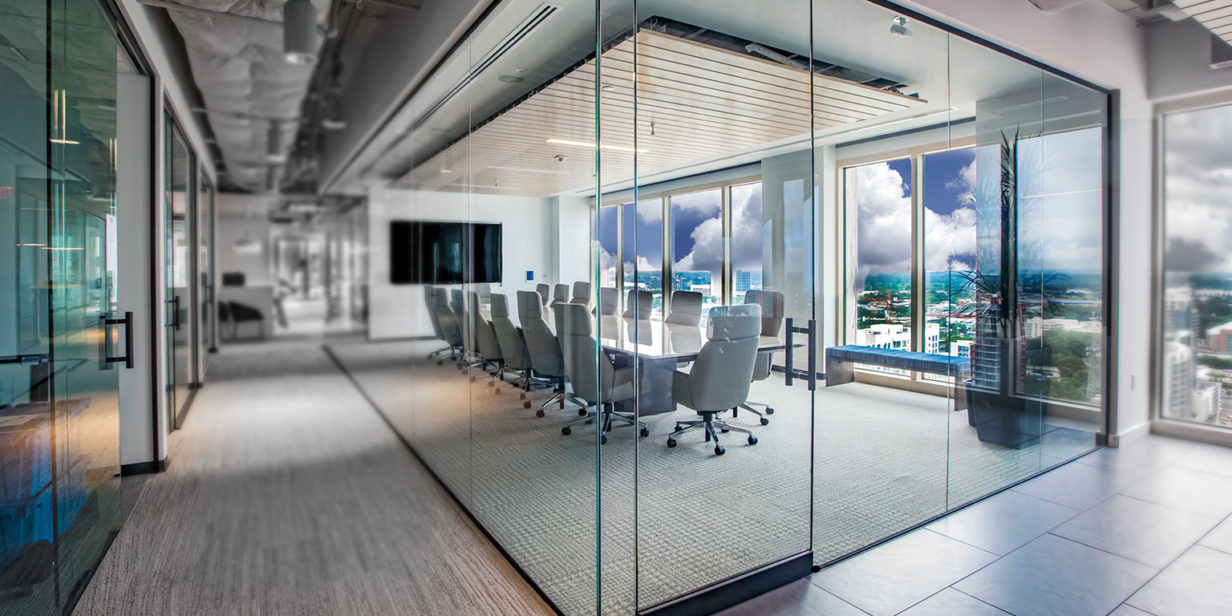
Denver vs Colorado Springs — Commercial Glazing & Tenant Improvement Contractors
Denver vs Colorado Springs — Commercial Glazing, Tenant Improvement Contractors & Office Build Out Markets
Denver and Colorado Springs are both major commercial construction markets along Colorado’s Front Range, but they create tenant improvement glazing opportunities for different reasons.
Denver has the larger office inventory, more institutional capital, more corporate headquarters activity, more high-rise and Class A office space, and a much stronger commercial property repositioning story. Colorado Springs is smaller, but its tenant improvement market benefits from defense, aerospace, healthcare, professional services, hospitality, technology, and a growing industrial base.
For commercial glazing contractors, general contractors, developers, property managers, architects, and office build out contractors, the distinction can be simplified:
Denver = Scale + Repositioning + Corporate Office TI
Colorado Springs = Specialized TI + Healthcare + Defense + Regional Growth
Both markets create demand for the same core glazing systems:
Storefront → Entrances → Office Glass → Conference Rooms → Interior Partitions → Security & Specialty Glazing
Denver vs Colorado Springs Commercial TI Glazing
| Commercial Glass Opportunity | Denver | Colorado Springs |
|---|---|---|
| Office tenant improvements | Exceptional | Very strong |
| Interior office glass | Exceptional | Very strong |
| Commercial building repositioning | Exceptional | Strong |
| Medical office glazing | Very strong | Exceptional |
| Defense/aerospace glazing | Moderate | Exceptional |
| Industrial TI glazing | Very strong | Very strong |
| Retail storefront renovation | Exceptional | Very strong |
| Restaurant build outs | Exceptional | Strong |
| High-rise office glass | Exceptional | Limited |
| Security glazing | Strong | Exceptional |
| Spec-suite glazing | Exceptional | Strong |
| Regional contractor reach | Metro + Front Range | Southern Colorado |
The products may be similar.
The project drivers are not.
Denver Commercial Glazing: Repositioning Existing Buildings
Denver’s office market creates a strong renovation story because many existing buildings are competing aggressively for tenants.
That can lead owners to invest in:
- New lobby glass
- Commercial entrance upgrades
- Vacant-suite renovations
- Interior office fronts
- Conference-room glass
- Amenity spaces
- Exterior storefront modernization
- Failed insulated-glass replacement
The glazing package becomes part of the leasing strategy.
Instead of asking only whether the storefront still works, ownership may ask whether the building looks competitive with the property the tenant is touring next.
That is a very different commercial-glass conversation.
Colorado Springs Commercial Glazing: Specialized Tenant Improvements
Colorado Springs has fewer giant office towers, but the tenant mix can create more specialized glazing requirements.
Projects may support:
- Aerospace companies
- Defense contractors
- Medical facilities
- Healthcare administration
- Technology users
- Professional offices
- Financial services
- Hospitality
- Industrial operations
That can push the glazing package beyond conventional office partitions into security, access control, specialized entrances, and more controlled interior environments.
Denver Office Build Out Contractors & Interior Glass
Denver office build outs can involve significant interior architectural glass.
Applications include:
- Executive offices
- Conference rooms
- Huddle rooms
- Training spaces
- Reception areas
- Collaboration rooms
- Glass corridors
- Interior entrances
Larger Denver projects may repeat the same glazing system across several floors.
That changes the contractor requirement.
A glazing subcontractor may need to manage:
Estimating → Submittals → Shop Drawings → Field Verification → Fabrication → Installation → Punch
At that scale, interior office glass becomes a meaningful construction package.
Colorado Springs Office Build Out Glass
Colorado Springs office projects can use the same systems but often within smaller or more specialized environments.
A project may combine:
Reception → Glass Offices → Conference Rooms → Secure Areas → Technical Operations
This creates a stronger connection between architectural glass and the tenant’s operational requirements.
The glazing system may need to balance:
- Transparency
- Privacy
- Security
- Access control
- Acoustic separation
- Daylight
That is especially relevant for defense, aerospace, healthcare, and technology-related tenants.
Interior Glass and Daylight
Both markets have opportunities to use interior glass to improve older office layouts.
A conventional perimeter-office plan may look like:
Exterior Window → Private Office → Opaque Wall → Interior Workspace
Replacing selected office fronts with glass can create:
Exterior Window → Glass Office → Interior Workspace
This allows daylight to reach deeper into the tenant space.
For Denver, that can help reposition aging office inventory.
For Colorado Springs, it can help modernize second-generation professional and institutional space.
Conference Room Glass
Conference rooms are among the most common interior-glass scopes in both cities.
A complete system may include:
Fixed Glass + Door + Framing + Hardware + Privacy + Acoustic Strategy
The acoustic component matters.
A glass conference room can look expensive and still perform poorly if conversations pass easily through doors, seals, ceilings, or adjacent construction.
The system should be selected around how the tenant actually intends to use the room.
Existing Glass Before Demolition
Denver and Colorado Springs both contain substantial amounts of second-generation tenant space.
That creates a recurring opportunity to inspect the glass before demolition.
Existing improvements may include:
- ✓ Glass offices
- ✓ Conference rooms
- ✓ Glass doors
- ✓ Sidelites
- ✓ Reception glazing
- ✓ Interior storefront
- ✓ Mirrors
- ✓ Exterior storefront
The previous tenant may have spent significant money on those systems.
Some may still have value.
Reusing Tempered Glass
Tempered architectural glass generally cannot simply be field-cut into a completely different size.
That means reuse requires planning.
A stronger TI process is:
Inventory → Measure → Compare With New Layout → Identify Reusable Openings → Demolish Selectively → Fabricate What’s Missing
The new tenant should not compromise the entire design around old glass.
But if several panels, doors, or office fronts can be reused naturally, the savings can be meaningful.
This is particularly attractive for landlords completing repeated suite turnovers.

Denver Storefront Tenant Improvements
Denver has a large inventory of ground-floor commercial space requiring storefront work.
Projects may involve:
- Retail
- Restaurants
- Fitness centers
- Medical offices
- Banks
- Mixed-use properties
- Office lobbies
The existing storefront should be evaluated for:
- Aluminum framing
- Glass condition
- Insulated units
- Door operation
- Hardware
- Thresholds
- Weather seals
- Perimeter sealants
- Accessibility
- Security
A major interior build out does not automatically mean the storefront needs complete replacement.
Colorado Springs Storefront Renovations
Colorado Springs has a similar opportunity but often in suburban retail centers, medical properties, hospitality buildings, and freestanding commercial facilities.
Selective modernization can include:
- Glass replacement
- Entrance repairs
- New closers
- New hardware
- IGU replacement
- Weather-seal replacement
- Perimeter resealing
- Privacy or branding film
Complete replacement becomes more attractive when the existing system has broader deterioration or no longer supports the tenant’s layout.
Storefront Repair vs Replacement
This is one of the most important TI budgeting decisions in both cities.
The commercial glass contractor should distinguish between component failure and system failure.
One broken glass lite is not a failed storefront.
One worn closer is not a failed entrance.
A few failed IGUs do not automatically justify removing all of the framing.
But chronic leakage, deteriorated aluminum, widespread glass failure, major entrance relocation, or security deficiencies may justify complete replacement.
Failed Insulated Glass
A newly renovated office or retail space can still look dated if the exterior contains fogged insulated glass.
Common indications include:
- Cloudiness
- Condensation between panes
- Haze
- Visible seal failure
When the framing remains usable, replacing failed units can modernize the façade without the cost and disruption of complete storefront replacement.
For Denver owners repositioning older commercial properties, this can be a particularly valuable capital-improvement strategy.
Denver High-Rise & Class A Glazing Advantage
Denver has the clear advantage in larger office and high-rise environments.
That creates more opportunities involving:
- High-end lobby glazing
- Large interior office packages
- Curtain wall modifications
- Multi-floor tenant build outs
- Premium entrance systems
- Architectural glass
A glazing contractor working in Denver may need to support both small TI scopes and much larger contract-glazing packages.
Colorado Springs Security Glazing Advantage
Colorado Springs has the stronger specialized-security story.
Defense, aerospace, institutional, healthcare, and controlled commercial environments may require enhanced glazing around:
- Entrances
- Reception areas
- Secure offices
- Controlled-access spaces
- Sensitive departments
The key principle is that a security glass product is not the same thing as a secure opening.
A complete system depends on:
Glass + Framing + Anchoring + Doors + Hardware + Adjacent Construction
The desired performance level should be established before products are selected.
Access Control and Glass Entrances
Both markets increasingly require electronic access control.
A commercial entrance may interact with:
- Card readers
- Electric strikes
- Magnetic locks
- Door-position switches
- Automatic operators
- Request-to-exit devices
That creates a coordination chain:
Glazing Contractor → GC → Hardware → Electrical → Security Integrator
Those requirements should be resolved before doors and framing are fabricated.
Denver Medical TI vs Colorado Springs Medical TI
Both markets support medical-office construction.
But Colorado Springs has a particularly strong healthcare and institutional orientation.
Medical glazing may be used around:
- Reception
- Administrative offices
- Conference rooms
- Staff areas
- Interior entrances
- Consultation spaces
The glazing strategy often needs to balance:
Daylight + Privacy + Safety + Accessibility
Clear office glass may work well in administrative environments while privacy film or more specialized systems are appropriate deeper inside the facility.
Denver Industrial TI vs Colorado Springs Industrial TI
Both cities support industrial tenant improvements.
Denver wins on overall scale.
Colorado Springs can offer specialized industrial projects connected to defense, aerospace, manufacturing, and regional logistics.
Typical glazing applications include:
- Warehouse office fronts
- Employee entrances
- Conference rooms
- Reception glass
- Interior observation windows
- Safety glazing
A large warehouse may have relatively little exterior glass, but the administrative and office portion can still create a substantial glazing package.
Warehouse Office Build Outs
This is a strong category in both markets.
A typical sequence may be:
Exterior Entrance → Reception → Administrative Offices → Conference Rooms → Training → Operations → Warehouse
Commercial glass can appear at almost every transition.
For glazing contractors, warehouse office work can become a repeatable source of TI business.
Restaurant Tenant Improvement Glazing
Denver has more total restaurant and hospitality construction volume.
Colorado Springs has a strong hospitality and tourism component of its own.
Restaurant glazing may include:
- Storefront systems
- Glass entrances
- Vestibules
- Private dining rooms
- Wine-room glass
- Bar mirrors
- Patio glazing
- Operable systems
For restaurants, exterior glass is especially valuable because it shows the activity inside.
The storefront becomes part of the customer-acquisition environment.

Retail Storefront Glazing
Retail projects in both markets may require:
Storefront Visibility → Customer Entrance → Merchandise → Interior Glass → Security
A new tenant may want to relocate an entrance, increase transparency, remove previous film, improve security, or create larger display areas.
The storefront should therefore be coordinated with the retail floor plan.
Commercial Building Repositioning
Denver has the stronger repositioning opportunity.
Older commercial properties may need to modernize:
- Entrances
- Lobby glazing
- Storefront systems
- Insulated glass
- Vacant suites
- Spec-suite interiors
- Conference rooms
- Amenity areas
The leasing journey becomes:
Exterior → Entrance → Lobby → Available Suite → Interior Glass
Every step can influence how prospective tenants perceive the building.
Colorado Springs also has repositioning opportunities, but the market tends to be more distributed among suburban, institutional, medical, and specialized commercial properties.
Spec Suite Glazing
Spec suites can work well in both cities.
A landlord may install:
- ✓ Conference-room glass
- ✓ Office fronts
- ✓ Reception glazing
- ✓ Glass doors
- ✓ Privacy film
That work can happen before a tenant signs.
It creates a more finished space during tours and can shorten the eventual build-out timeline.
Denver may offer more volume because of its larger office inventory.
Colorado Springs may offer strong opportunities where landlords want to modernize professional and medical spaces quickly.
Denver vs Colorado Springs Climate Considerations
Both markets share Front Range exterior conditions.
Storefronts and entrances may experience:
Strong UV + Temperature Swings + Wind + Snow + Freeze-Thaw
That matters when value engineering exterior systems.
Interior conference-room glass and exterior storefront serve very different purposes.
One is primarily architectural.
The other is part of the building envelope.
The performance requirements should not be treated as interchangeable.
Commercial Glass Fabrication and TI Scheduling
The scheduling challenge is identical in both markets.
Glass may be installed late.
But glazing decisions need to happen early.
A simplified sequence is:
Framing → Drywall → Finished Openings → Field Measure → Fabrication → Installation → Hardware Adjustment
If finished openings are delayed, measurement is delayed.
If measurement is delayed, fabrication is delayed.
That can push glass directly against occupancy.
General contractors should therefore track the glass release date, not simply the installation date.
Flooring & Glass Coordination
Interior glass can depend on:
- Finished-floor elevations
- Flooring thickness
- Thresholds
- Bottom channels
- Floor closers
- Material transitions
Late flooring changes can create door-clearance and glass-dimension problems.
The glazing contractor should receive accurate finish information before fabrication.
Ceiling & Full-Height Glass Coordination
Floor-to-ceiling glazing can interact with:
- Ceiling grids
- Structural headers
- Deflection
- Lighting
- Fire sprinklers
- Mechanical systems
Glass may be installed late, but it should never be coordinated late.
Occupied Commercial Renovations
Both Denver and Colorado Springs contain active buildings where tenant improvements must occur around existing occupants.
Glazing work may require:
- ✓ Night installation
- ✓ Weekend work
- ✓ Temporary entrances
- ✓ Phased storefront replacement
- ✓ Temporary board-up
- ✓ Protected tenant circulation
Exterior glazing deserves particular planning because removing it can affect weather protection and security at the same time.
Denver vs Colorado Springs Commercial Glass Value Engineering
The strongest strategies differ slightly.
Denver
Think:
Reuse → Retrofit → Reposition → Standardize
Large inventories and repeat landlords create strong opportunities for portfolio-wide glazing standards.
Colorado Springs
Think:
Reuse → Specialize → Secure → Modernize
The tenant mix can justify more attention to security, healthcare, institutional, and specialty glazing.
Both should start by evaluating the existing glass before demolition.
Front Range Commercial Glazing Strategy
The bigger opportunity is connecting Denver and Colorado Springs rather than viewing them as isolated markets.
The corridor can extend:
Denver → Centennial → Castle Rock → Monument → Colorado Springs
That creates a continuous commercial construction footprint containing:
- Offices
- Medical buildings
- Industrial facilities
- Retail centers
- Restaurants
- Hospitality properties
- Corporate campuses
- Defense and aerospace facilities
For glazing contractors and tenant improvement contractors, the regional strategy can be much more valuable than either market alone.
Which Market Is Better for Commercial TI Glass?
Denver wins on scale, office inventory, property repositioning, high-end TI, and portfolio opportunities.
Colorado Springs wins on specialized demand, particularly healthcare, defense, aerospace, institutional environments, and security-sensitive tenant improvements.
The markets complement one another.
Denver can generate larger volumes of office, retail, industrial, and building-modernization work.
Colorado Springs can generate specialized projects where glazing performance matters as much as appearance.
Denver vs Colorado Springs — Two Commercial Glazing Engines
The clearest distinction is:
Denver
Existing Inventory → Competition → Repositioning → Tenant Improvements → Commercial Glass
Colorado Springs
Specialized Tenant Demand → Build Out → Security / Privacy / Performance → Commercial Glass
For developers, property owners, architects, facility managers, general contractors, and tenant improvement contractors operating across Colorado, both markets support the same fundamental glazing strategy:
Survey Existing Glass → Preserve What Has Value → Coordinate Storefront & Entrances → Design Interior Glass Around the Tenant → Resolve Privacy, Security & Acoustics Early → Release Fabrication Before It Threatens Occupancy
That turns Denver and Colorado Springs into more than two city markets. Together, they form the southern half of a much larger Front Range commercial glazing and tenant improvement corridor.