
Dallas, Oklahoma City & Albuquerque — Commercial Glass & TI Glazing Contractors
Dallas, Oklahoma City & Albuquerque — Commercial Glass, Tenant Improvement Glazing Contractors & Office Build Out Markets
Dallas, Oklahoma City, and Albuquerque form a useful commercial glazing comparison because they represent three very different construction environments across the South Central and Southwest United States.
Dallas-Fort Worth offers scale, corporate expansion, industrial growth, large office build outs, retail, healthcare, and multi-property programs.
Oklahoma City offers regional corporate demand, healthcare, energy, industrial growth, retail, and recurring second-generation tenant improvements.
Albuquerque adds a more specialized mix of aerospace, defense, advanced manufacturing, research, healthcare, and technically complex commercial facilities.
For commercial glass contractors, tenant improvement contractors, general contractors, developers, architects, property managers, and facility teams, the three markets can be summarized:
Dallas = Scale + Repeatability + Corporate TI
Oklahoma City = Relationships + Existing-Space Renovation + Regional TI
Albuquerque = Specialized Facilities + Retrofit + Security & Technical Glazing
All three create demand for:
Storefront → Commercial Entrances → Office Glass → Conference Rooms → Interior Partitions → Security → Specialty Glazing
Dallas vs Oklahoma City vs Albuquerque Commercial TI Glazing
| Commercial Glass Opportunity | Dallas-Fort Worth | Oklahoma City | Albuquerque |
|---|---|---|---|
| Office tenant improvements | Exceptional | Very strong | Strong |
| Interior office glass | Exceptional | Very strong | Very strong |
| Corporate office build outs | Exceptional | Strong | Moderate |
| Industrial TI glazing | Exceptional | Very strong | Exceptional |
| Warehouse office glass | Exceptional | Very strong | Very strong |
| Medical office glazing | Exceptional | Exceptional | Very strong |
| Retail storefront renovation | Exceptional | Very strong | Strong |
| Existing-building modernization | Very strong | Exceptional | Exceptional |
| Security glazing | Very strong | Strong | Exceptional |
| Aerospace / defense glazing | Strong | Strong | Exceptional |
| Advanced manufacturing | Very strong | Strong | Exceptional |
| Multi-property TI programs | Exceptional | Strong | Moderate |
The biggest distinction is not the glass itself.
It is the type of commercial activity creating the project.
Regional TI Glazing Contractors Overview
Denver to Dallas Commercial Glass & TI Markets
Dallas, OKC & Denver Storefront & TI Glazing
Colorado Springs, Fort Collins & SLC
Regional TI Glazing Contractors Overview TI Glass
Denver, SLC & Dallas Office Glass & TI Glazing
Dallas, OKC & Albuquerque Commercial Glass & TI
Colorado Regional TI Glazing Contractors
SLC vs Dallas: Class A Office Glass & TI
Colorado Springs vs Albuquerque Storefront & TI
Dallas vs Denver: Office Buildout & TI Glass
OKC vs Albuquerque Commercial Glass & TI
Fort Collins vs SLC Office Glass & TI Markets
Dallas Commercial Glass & Tenant Improvement Glazing
Dallas is the scale market.
A glazing contractor can move between:
- Corporate offices
- Headquarters
- Medical suites
- Restaurants
- Retail centers
- Industrial campuses
- Distribution facilities
- Mixed-use developments
- Commercial building repositioning
- Multi-location portfolio work
That diversity creates one of the broadest commercial-glass markets in the region.
A contractor working with the right GCs may encounter both large interior office packages and high-volume storefront work within the same metro.
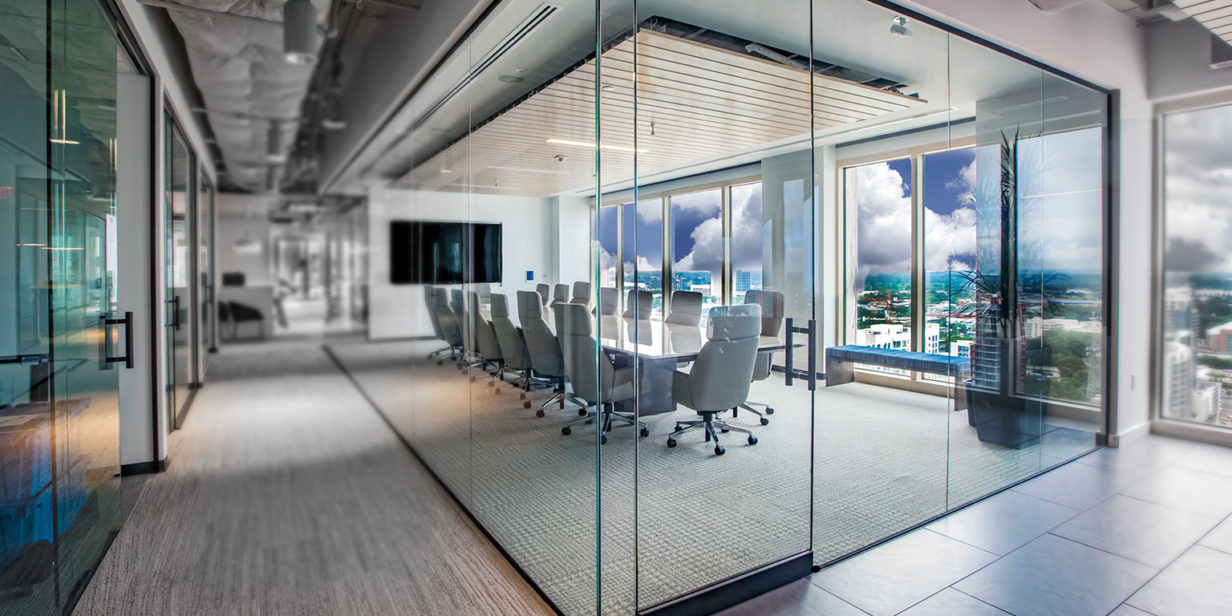
Dallas Office Build Out Glass
Corporate office tenant improvements can involve:
- Executive offices
- Conference rooms
- Boardrooms
- Huddle rooms
- Training spaces
- Reception glazing
- Glass corridors
- Interior entrances
- Privacy systems
The opportunity becomes especially attractive when the same details repeat.
One office-front design may be used 50 times.
One conference-room system may be repeated across several floors.
That makes standardization and execution capacity major competitive advantages.
Oklahoma City Commercial Glass & TI Contractors
Oklahoma City operates at a smaller scale but can be highly attractive for repeat commercial work.
The tenant mix includes:
- Healthcare
- Energy
- Professional services
- Financial offices
- Industrial users
- Retail
- Restaurants
- Hospitality
- Regional corporations
Many of these projects occur inside existing commercial buildings.
That creates recurring opportunities involving:
Existing Suite → Renovation → New Tenant → New Glass Package
For glazing contractors, the value may come as much from repeat GC and property-manager relationships as from the size of any individual project.
Oklahoma City Office TI Glass
Office projects may require:
- Glass office fronts
- Conference rooms
- Reception glass
- Glass doors
- Sidelites
- Interior storefront
- Privacy film
- Access-controlled entrances
The scale may be smaller than Dallas, but the coordination requirements are the same.
A 7,500-square-foot office can still require several custom glass rooms, doors, hardware, privacy, and access control.
Denver vs Colorado Springs Commercial Glazing
Albuquerque vs SLC Commercial Glass & TI
Dallas vs OKC Commercial TI & Buildout Markets
Colorado Springs vs Fort Collins TI & Office Glass
Denver vs SLC Commercial Glass & TI Glazing
Denver vs Dallas TI Glazing & Commercial Glass
Dallas TI Glass & Commercial Glazing
Albuquerque Commercial Glass & TI Contractors
OKC TI Glazing & Storefront Contractors
Salt Lake City Commercial TI & Office Glass
Fort Collins TI Glass & Commercial Glazing
Colorado Springs Commercial Glass & TI Glazing
Denver Tenant Improvement Glazing Contractors
Albuquerque Commercial Glass & Tenant Improvement Contractors
Albuquerque creates the most specialized story of the three.
The market supports conventional office, retail, medical, restaurant, and industrial TI work.
But it also has growing demand tied to:
- Aerospace
- Defense
- Advanced manufacturing
- Engineering
- Research
- Technical facilities
- Controlled commercial environments
That changes what commercial glass can mean.
The contractor may need to move beyond ordinary storefront and conference-room glass into security, observation, controlled access, and more specialized interior systems.
Albuquerque Technical & Specialized Glazing
A technically oriented facility may combine:
Reception → Administrative Offices → Conference Rooms → Engineering → Research → Manufacturing → Operations
Glass may help separate these functions while preserving visibility.
Applications can include:
- Interior office fronts
- Observation glazing
- Controlled entrances
- Reception systems
- Laminated glass
- Security glazing
- Specialty partitions
That is one of Albuquerque’s strongest differentiators.
Existing Glass Before TI Demolition
All three markets contain large amounts of second-generation commercial space.
That makes existing glass one of the most overlooked TI assets.
Before demolition, document:
- ✓ Conference rooms
- ✓ Glass office fronts
- ✓ Glass doors
- ✓ Sidelites
- ✓ Reception glazing
- ✓ Interior storefront
- ✓ Mirrors
- ✓ Exterior storefront
The previous tenant may have invested heavily in those systems.
The lease ended.
The useful life of the glass did not.
Reusing Tempered Glass
Tempered glass generally cannot simply be field-cut into a completely different size after fabrication.
That makes reuse a planning issue.
A better sequence is:
Inventory → Measure → Compare With New TI Plan → Identify Reusable Openings → Selective Demolition → New Fabrication
Not everything will work.
But even partial reuse can reduce:
- Demolition
- Disposal
- Fabrication
- Material costs
- Installation
For landlords turning suites repeatedly, this can become a meaningful strategy.
Dallas Existing-Glass Reuse
Dallas offers the largest absolute opportunity because of the scale of its office inventory.
A property owner managing several buildings may be able to create a repeatable process for cataloging, storing, and reusing common doors, panels, and office-front components.
The more standardized the original TI was, the easier this becomes.
Oklahoma City Existing-Glass Reuse
Oklahoma City can benefit from reuse as a value-engineering tool.
A previous tenant’s conference room may already be usable.
The new tenant may only need:
Keep Glass → Change Privacy → Update Hardware → Modify Door
That can preserve TI budget for other work.
Albuquerque Existing-Glass Reuse
Albuquerque adds another possibility.
Technical, medical, and office facilities may contain existing interior partitions or observation glazing with useful remaining life.
The question becomes whether the existing system remains compatible with the new operational requirements.
If it does, reuse can be particularly valuable.

Interior Office Glass in All Three Markets
Interior office glazing remains one of the most repeatable categories.
Applications include:
- Private offices
- Executive offices
- Conference rooms
- Boardrooms
- Huddle rooms
- Training areas
- Reception
- Collaboration spaces
The architectural value often comes from preserving daylight.
A conventional office layout may create:
Exterior Windows → Perimeter Offices → Opaque Walls → Interior Workspace
Glass office fronts can create:
Exterior Windows → Glass Offices → Interior Workspace
The building did not gain more exterior windows.
The tenant simply gets more value from the windows already there.
Conference Room Glass & Acoustics
Conference rooms should be treated as systems:
Glass + Framing + Door + Hardware + Privacy + Acoustic Strategy
A visually impressive conference room can still perform badly if every conversation is audible outside.
Acoustic performance can be affected by:
- Glass thickness
- Laminated configurations
- Framing
- Door seals
- Perimeter seals
- Ceiling construction
- Adjacent partitions
This matters in corporate, legal, financial, medical, defense, and technical environments.
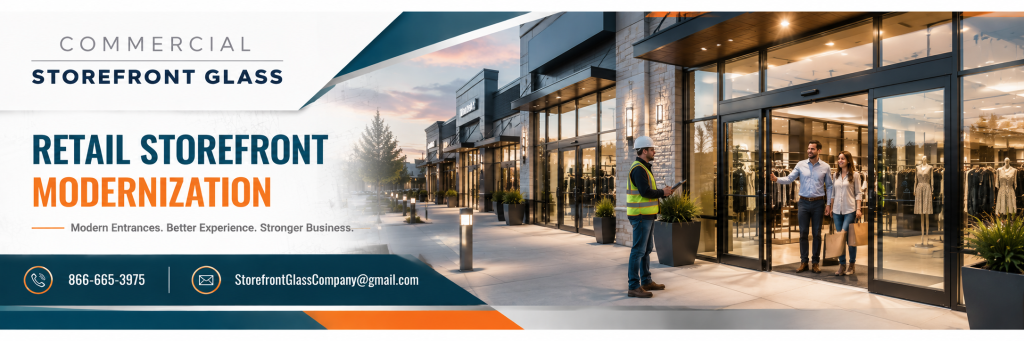
Dallas Executive & Corporate Glazing
Dallas has the strongest premium corporate-office opportunity.
Large build outs can include:
- Boardrooms
- Executive corridors
- Premium reception glazing
- Full-height office fronts
- High-end hardware
- Acoustic systems
- Switchable privacy glass
- Access-controlled doors
The opportunity increases as the glazing package becomes more standardized across multiple floors.
Oklahoma City Professional & Healthcare Glass
Oklahoma City can lean more heavily toward healthcare, professional offices, financial services, and energy users.
That makes privacy and durability particularly relevant.
A medical or financial tenant may not want completely transparent conference rooms.
Solutions can include:
- Frosted bands
- Gradient film
- Laminated decorative glass
- Full-height privacy film
- Patterned glazing
Existing clear glass can sometimes be adapted instead of replaced.
Albuquerque Security & Controlled-Access Glass
Albuquerque’s specialized tenants can create stronger demand for:
- Controlled entrances
- Secure reception
- Interior separation
- Laminated glass
- Specialty framing
- Security glazing
- Observation systems
But security glass should never be considered in isolation.
The complete opening can depend on:
Glass + Framing + Anchoring + Doors + Hardware + Adjacent Construction
The performance objective should be established before products are selected.
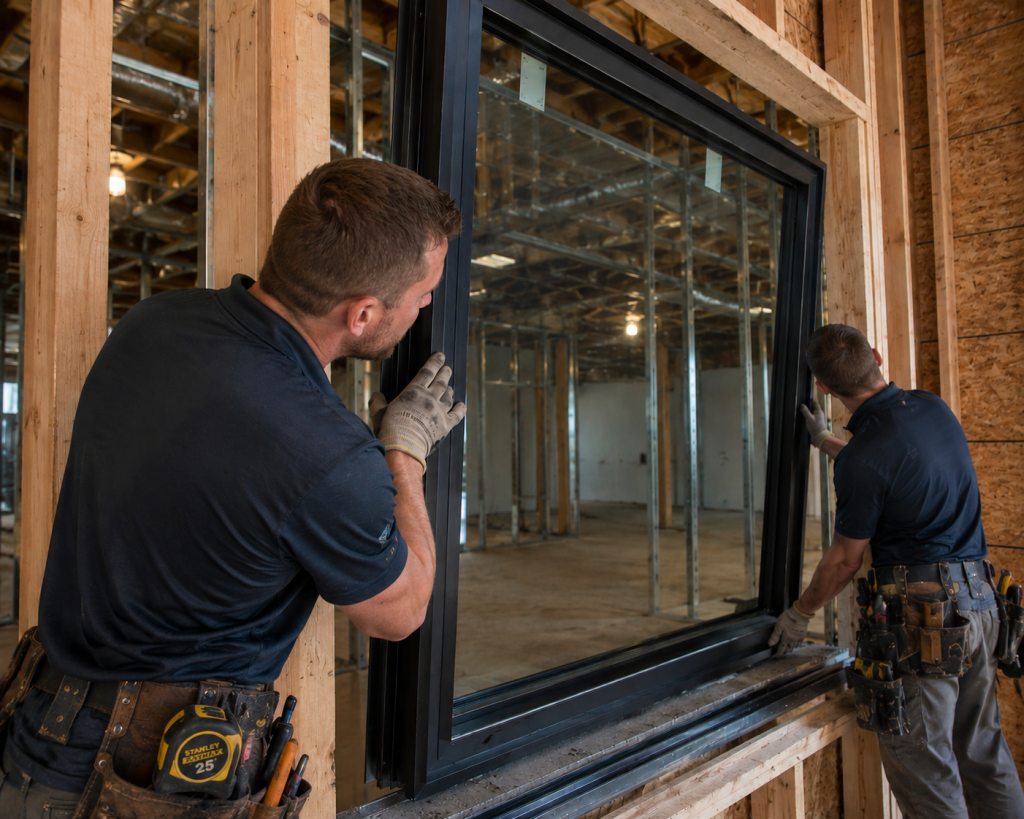
Commercial Storefront Tenant Improvements
All three markets have large inventories of second-generation:
- Retail
- Restaurants
- Medical offices
- Banks
- Fitness centers
- Ground-floor offices
That creates a constant storefront decision about whether to repair, modify, or replace.
Before complete replacement, inspect:
- Aluminum framing
- Glass condition
- IGUs
- Entrance doors
- Closers
- Hardware
- Thresholds
- Weather seals
- Perimeter sealants
- Accessibility
- Security
- Component Failure vs System Failure
This distinction can protect the TI budget.
One broken lite is a component problem.
One bad closer is a component problem.
Several failed IGUs may still be a component problem.
But other conditions can indicate system failure:
- Deteriorated framing
- Chronic leakage
- Widespread glass failure
- Major entrance relocation
- Security deficiencies
- Extensive façade redesign
The correct response depends on which problem the building actually has.
Failed Insulated Glass
Fogged insulated glass can make a newly renovated property still look old.
Typical symptoms include:
- Cloudiness
- Condensation between panes
- Haze
- Uneven exterior appearance
If the surrounding framing remains in usable condition, selective IGU replacement may be more economical than complete storefront replacement.
This is particularly relevant for existing-building modernization in Oklahoma City and Albuquerque, but also applies throughout Dallas’ enormous second-generation inventory.
Retail Tenant Improvement Glazing
Retail glass follows a customer sequence:
Traffic → Storefront → Merchandise → Entrance → Sales Floor
A new tenant may want to:
- Increase transparency
- Relocate an entrance
- Remove old film
- Add security
- Create larger display zones
The storefront should be coordinated with the merchandising plan, not treated as an unrelated exterior feature.
Restaurant Tenant Improvement Glass
Restaurant glazing follows a different sequence:
Traffic → Storefront → Activity → Atmosphere → Entrance
The storefront effectively displays the restaurant itself.
Potential scopes include:
- Exterior glass
- Entrance doors
- Vestibules
- Private dining glass
- Wine rooms
- Bar mirrors
- Patio glass
- Operable systems
Dallas wins on sheer volume.
Oklahoma City offers a strong regional restaurant and retail base.
Albuquerque creates good adaptive-reuse opportunities inside existing commercial spaces.
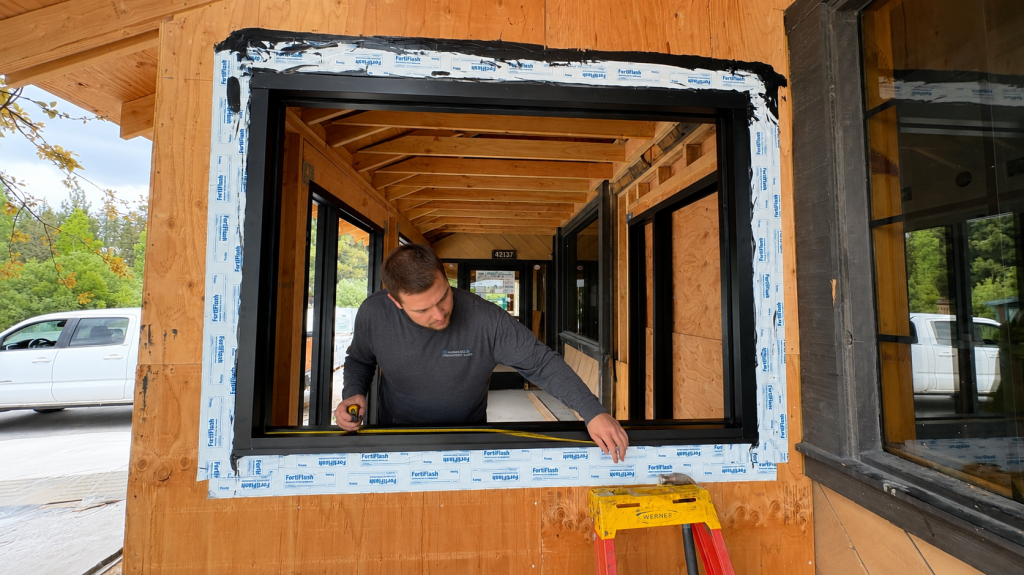
Medical Office TI Glazing
Healthcare is strong across all three markets.
Potential applications include:
- Reception glazing
- Administrative offices
- Conference rooms
- Staff areas
- Automatic entrances
- Privacy glass
- Interior doors
Medical glazing needs to balance:
Daylight + Privacy + Safety + Accessibility + Cleaning
The same glass specification should not automatically be used for every room.
Dallas Industrial TI Glazing
Dallas has the strongest industrial volume.
Warehouse and distribution facilities can generate:
- Employee entrances
- Reception storefront
- Interior office fronts
- Conference rooms
- Training-room glass
- Observation windows
- Safety glazing
A large warehouse may have relatively little exterior glass.
The office component can still create a substantial glazing package.
Oklahoma City Industrial TI Glass
Oklahoma City offers a strong industrial and logistics base of its own.
The opportunity often involves a warehouse combined with an office build out rather than the warehouse envelope itself.
That can create repeatable work for glazing contractors working with industrial GCs.
Albuquerque Industrial & Advanced Manufacturing Glass
Albuquerque’s industrial opportunity becomes more specialized.
Projects may combine:
Manufacturing + Engineering + Research + Office + Operations
The glass contractor may need to support visual separation, controlled access, observation, and potentially higher security requirements.
That makes Albuquerque’s industrial TI story qualitatively different from a conventional logistics warehouse.
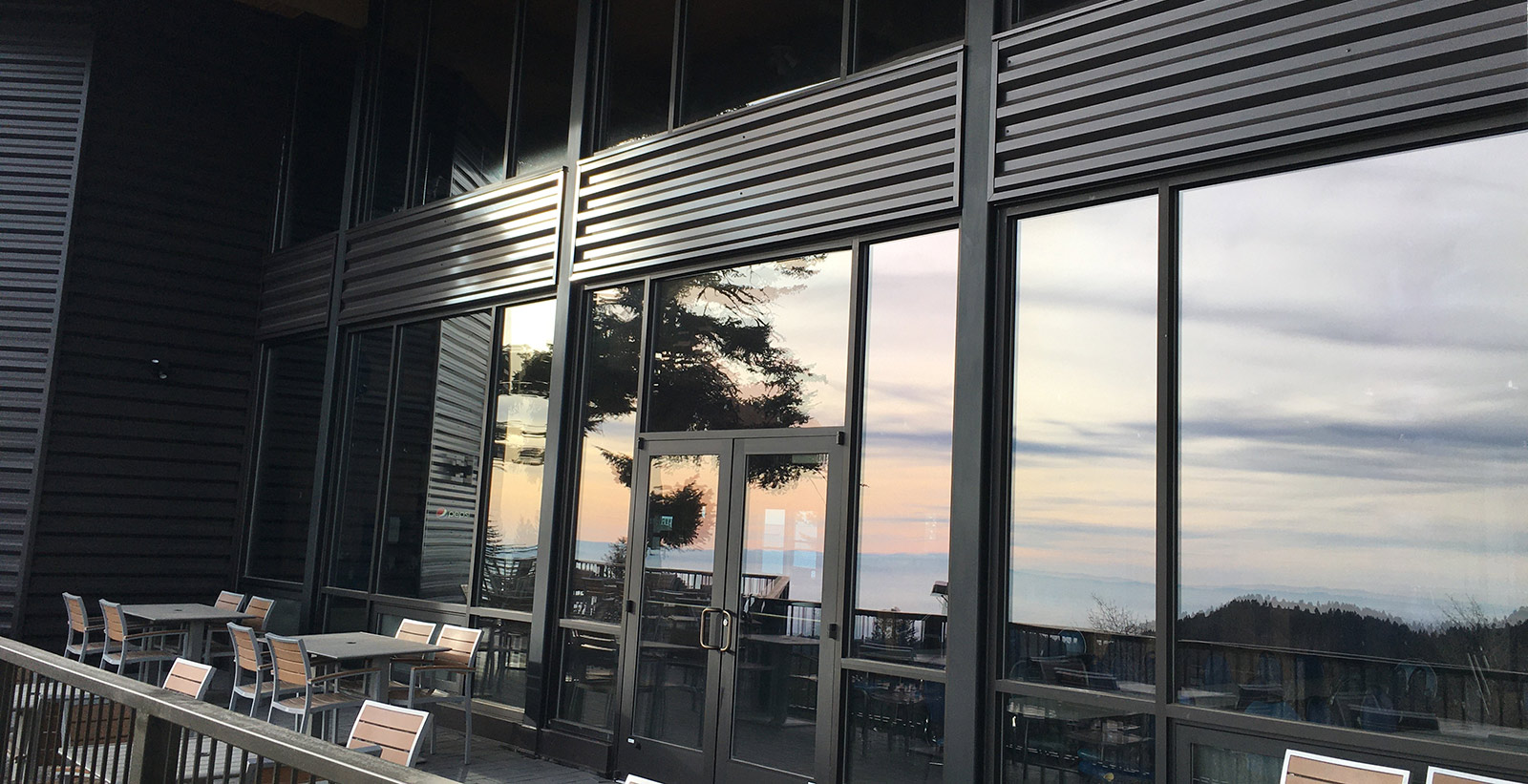
Warehouse Office Build Outs
Across all three markets, warehouse office glazing deserves to be treated as a distinct niche.
A typical sequence is:
Exterior Entrance → Reception → Administrative Offices → Conference Room → Training → Operations → Warehouse
Commercial glass may appear throughout that chain.
For glazing contractors, a 10,000-square-foot office inside a 200,000-square-foot warehouse can be the most architecturally intensive part of the project.
Commercial Entrance Systems
Entrances are another major category across Dallas, Oklahoma City, and Albuquerque.
A complete entrance may include:
- Aluminum doors
- All-glass doors
- Sidelites
- Transoms
- Closers
- Pivots
- Continuous hinges
- Panic hardware
- Automatic operators
- Electrified hardware
The entrance should be treated as an operating system.
It may cycle thousands of times while providing accessibility, security, weather protection, and customer circulation.
Access Control & Glass Doors
Electronic access introduces coordination between:
Glazing Contractor → General Contractor → Hardware → Electrical → Security Integrator
The entrance may require:
- Card readers
- Electric strikes
- Magnetic locks
- Door sensors
- Automatic operators
- Request-to-exit devices
These requirements should be resolved before fabrication.
Late access-control decisions can quickly become glass and framing problems.
Dallas Commercial Building Repositioning
Dallas has a massive repositioning opportunity simply because of its commercial inventory.
Older buildings can be modernized through:
Lobby → Entrance → Spec Suite → Interior Office Glass → Amenities
The scale also allows owners to establish repeatable glazing standards across multiple properties.
Oklahoma City Commercial Property Modernization
Oklahoma City can be especially attractive for targeted renovation.
A property owner may focus on:
- Entrance upgrades
- Failed IGU replacement
- Storefront repairs
- Spec suites
- Interior office glass
- Privacy upgrades
This allows existing buildings to compete without requiring complete reconstruction.
Albuquerque Adaptive Reuse & Modernization
Albuquerque’s existing-building story can include both renovation and conversion.
Older commercial properties may be adapted for:
- Technical users
- Medical
- Research
- Industrial
- Office
- Mixed-use functions
That creates stronger opportunities for custom field conditions and retrofit glazing.
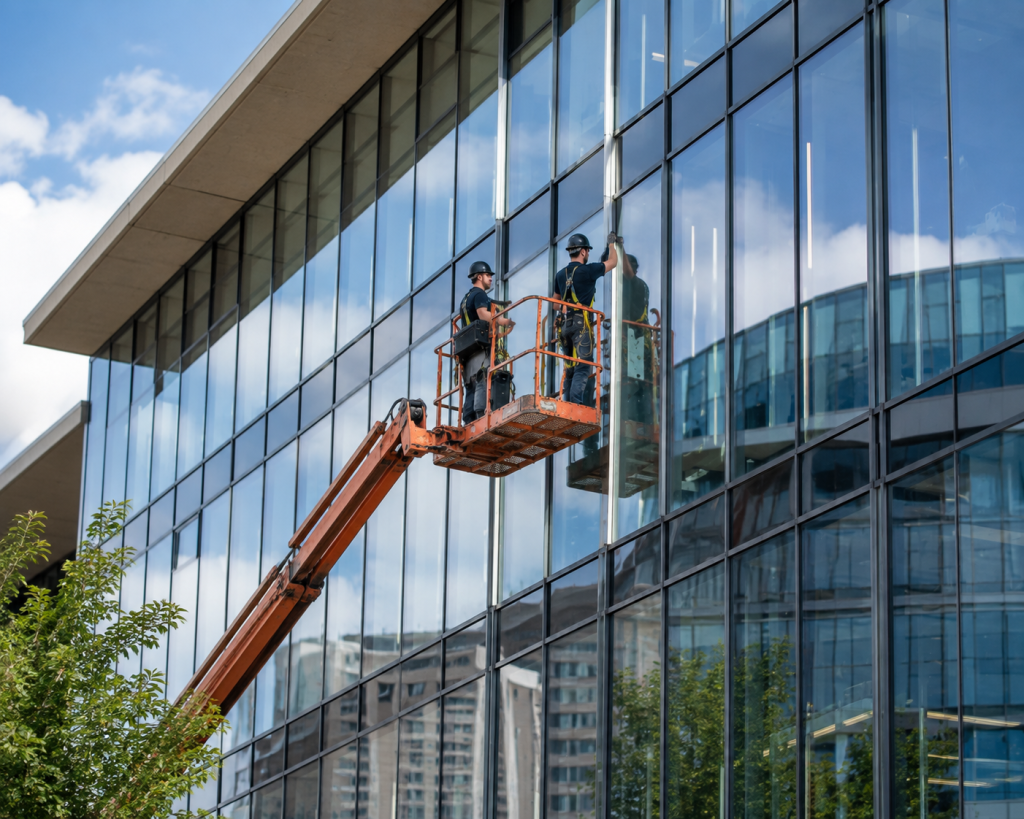
Spec Suite Glazing
Speculative suites can create repeatable TI work in all three markets.
Ownership may install:
- ✓ Conference rooms
- ✓ Office fronts
- ✓ Reception glass
- ✓ Glass doors
- ✓ Privacy film
That work can be completed before a tenant signs.
Dallas offers the largest scale.
Oklahoma City can use spec suites to make existing buildings more competitive.
Albuquerque can use them selectively in better-positioned office properties and specialized commercial environments.
Commercial Glass Value Engineering
The strongest value engineering does not begin by asking how to make the glass cheaper.
It begins by asking where the glass creates enough value to justify the cost.
Priorities may include:
Reception
High visibility.
Conference Rooms
Frequent use and strong architectural impact.
Perimeter Offices
Daylight transfer.
Entrances
Appearance, security, accessibility, and operation.
Specialized Areas
Privacy, acoustics, observation, or protection.
Secondary areas can be evaluated more aggressively for cost.
Dallas TI Glass Strategy
Dallas rewards:
Standardize → Repeat → Scale
Limit unnecessary variation across:
- Office-front dimensions
- Hardware
- Doors
- Framing
- Privacy patterns
- Glass types
That becomes extremely valuable on large corporate and portfolio projects.
Oklahoma City TI Glass Strategy
Oklahoma City rewards:
Reuse → Modernize → Build Relationships → Repeat
The market can be ideal for glazing contractors that become trusted partners for recurring local GCs and property managers.
Albuquerque TI Glass Strategy
Albuquerque rewards:
Reuse → Retrofit → Specialize → Protect
The contractor who can handle ordinary storefront and office glass while also supporting specialized technical requirements can occupy a valuable niche.
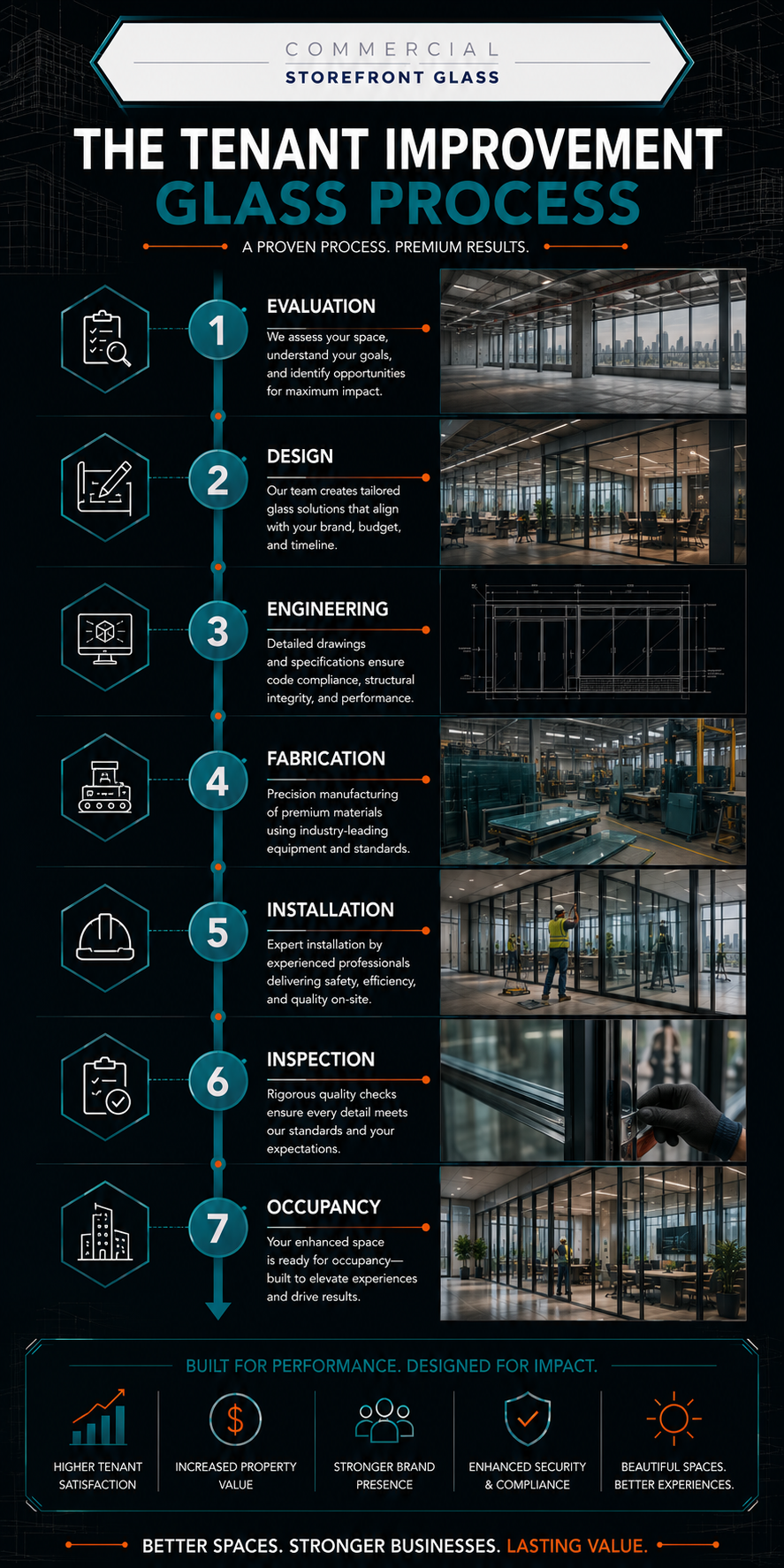
Glass Fabrication & Tenant Improvement Scheduling
The same rule applies in all three markets.
Glass is installed late but must be planned early.
A simplified sequence is:
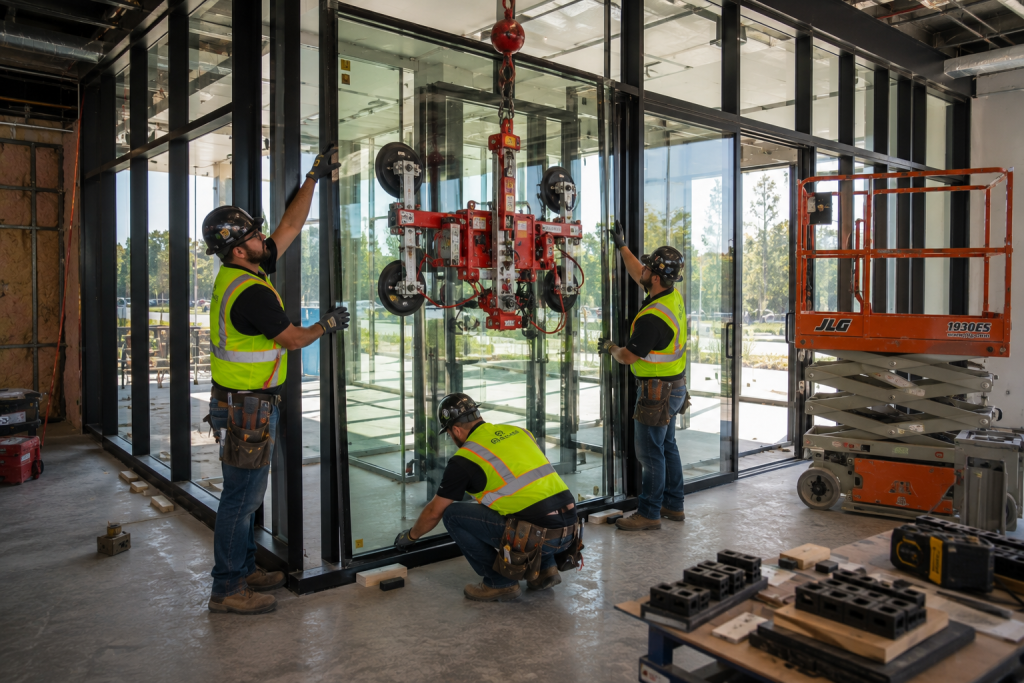
Design → Framing → Drywall → Finished Openings → Field Measure → Fabrication → Installation → Hardware → Punch
If the finished opening is late, field measurement is late.
Then fabrication is late.
Then glass becomes one of the final obstacles to occupancy.
General contractors should track the glass release date, not simply the glass installation date.
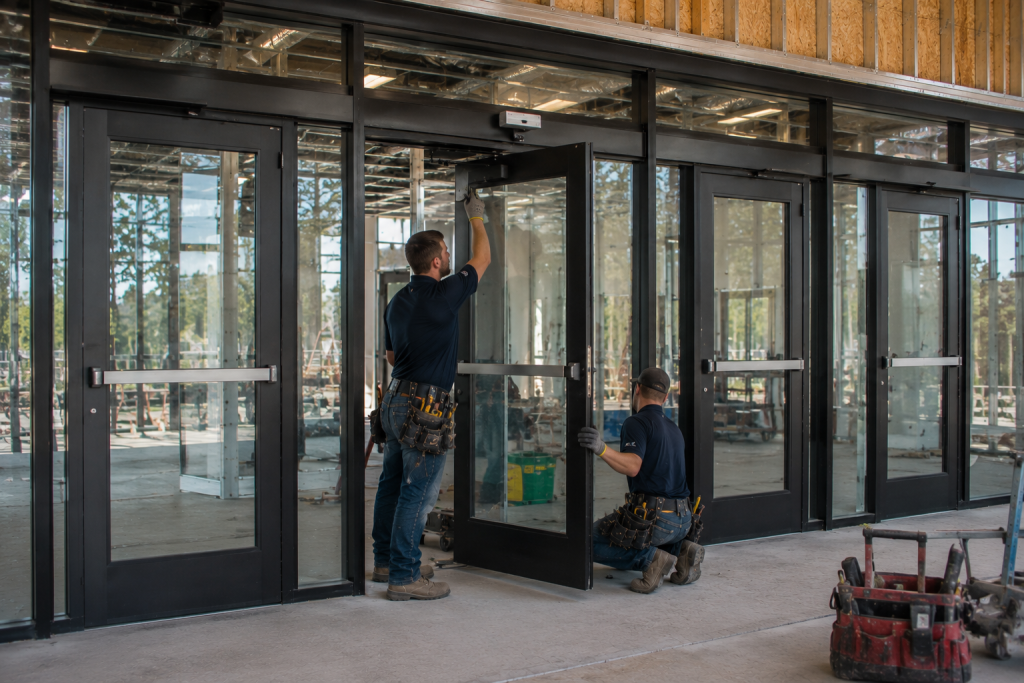
Flooring, Ceiling & Glass Coordination
Interior glazing can depend on:
- Finished-floor elevation
- Flooring thickness
- Thresholds
- Bottom channels
- Floor closers
- Ceiling grids
- Structural headers
- Deflection
- Lighting
- Sprinklers
That creates a simple rule.
Glass may be installed near the end of the TI, but it should never be coordinated near the end.
Dallas vs Oklahoma City vs Albuquerque — Which Market Is Best?
Dallas offers the strongest combination of:
Corporate TI + Industrial + Medical + Retail + Multi-Floor Office + Portfolio Programs
It rewards glazing contractors capable of managing large, repeatable packages.
Oklahoma City — Best for Repeat Regional TI
Oklahoma City provides a strong combination of:
Healthcare + Energy + Office + Industrial + Retail + Existing-Space Renovation
It rewards relationships and recurring project flow.
Albuquerque — Best for Specialized Technical Glazing
Albuquerque provides an unusual mix of:
Aerospace + Defense + Advanced Manufacturing + Research + Healthcare + Retrofit
It rewards technical capability and understanding of specialized commercial environments.
Three Markets, Three Different Commercial Glazing Engines
The clearest distinction is:
Dallas
Corporate & Industrial Growth → Leasing → Buildout → Repeatable Commercial Glass
Oklahoma City
Existing Commercial Inventory → Tenant Turnover → Renovation → TI Glazing
Albuquerque
Specialized Industry → Facility Expansion → Technical TI → Specialized Commercial Glass
Together, the three markets create a broad commercial glazing corridor stretching from North Texas through Oklahoma and into the Southwest.
For commercial glass contractors, tenant improvement contractors, property owners, developers, architects, facility managers, and general contractors, the strongest process remains consistent across all three:
Survey Existing Glass → Preserve What Has Value → Coordinate Storefront & Entrances → Design Interior Glass Around the Tenant → Resolve Privacy, Acoustics & Security Early → Standardize Where Possible → Release Fabrication Before It Threatens Occupancy
That approach allows commercial glass to function as part of the tenant improvement strategy, building modernization strategy, and long-term asset plan rather than simply another finish installed at the end of construction.