
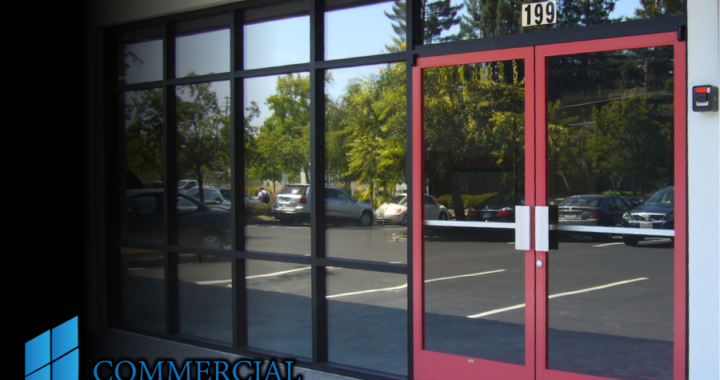
Dallas, Oklahoma City & Denver — Commercial Storefront & TI Glazing Contractors
Dallas, Oklahoma City & Denver — Commercial Storefront, TI Glazing Contractors & Tenant Improvement Glass
Dallas, Oklahoma City, and Denver create three distinct commercial storefront and tenant improvement glazing markets.
Dallas-Fort Worth is driven by corporate expansion, massive industrial development, retail, healthcare, Class A offices, headquarters projects, and large-scale tenant buildouts.
Oklahoma City offers a smaller but highly practical market built around healthcare, energy, professional offices, retail, restaurants, industrial facilities, and recurring second-generation tenant improvements.
Denver combines a large commercial base with a different opportunity: office repositioning, existing-building modernization, Class A competition, industrial tenant improvements, storefront renovations, and adaptive reuse.
From a commercial glass perspective:
- Dallas = Build + Standardize + Scale
- Oklahoma City = Renovate + Maintain + Repeat
- Denver = Reposition + Retrofit + Modernize
Together, these markets create demand across:
Commercial Storefront → Entrance Systems → Office Glass → Conference Rooms → Interior Partitions → Industrial TI → Building Modernization
Dallas vs Oklahoma City vs Denver Commercial TI Glazing
| Commercial Glass Opportunity | Dallas | Oklahoma City | Denver |
|---|---|---|---|
| Commercial storefront TI | Exceptional | Very strong | Exceptional |
| Office tenant improvements | Exceptional | Very strong | Exceptional |
| Interior office glass | Exceptional | Very strong | Exceptional |
| Class A office glazing | Exceptional | Strong | Exceptional |
| Retail storefront renovation | Exceptional | Very strong | Exceptional |
| Restaurant TI glazing | Exceptional | Very strong | Exceptional |
| Industrial office buildouts | Exceptional | Very strong | Exceptional |
| Warehouse office glass | Exceptional | Very strong | Very strong |
| Existing-building modernization | Very strong | Exceptional | Exceptional |
| Spec-suite glazing | Exceptional | Strong | Exceptional |
| Commercial entrances | Exceptional | Very strong | Exceptional |
| Multi-property programs | Exceptional | Strong | Very strong |
The glazing systems overlap substantially.
What changes is why the building owner or tenant is spending the money.
Denver vs Colorado Springs Commercial Glazing
Albuquerque vs SLC Commercial Glass & TI
Dallas vs OKC Commercial TI & Buildout Markets
Colorado Springs vs Fort Collins TI & Office Glass
Denver vs SLC Commercial Glass & TI Glazing
Denver vs Dallas TI Glazing & Commercial Glass
Dallas TI Glass & Commercial Glazing
Albuquerque Commercial Glass & TI Contractors
OKC TI Glazing & Storefront Contractors
Salt Lake City Commercial TI & Office Glass
Fort Collins TI Glass & Commercial Glazing
Colorado Springs Commercial Glass & TI Glazing
Denver Tenant Improvement Glazing Contractors
Dallas Commercial Storefront & Tenant Improvement Glazing
Dallas is the scale market.
A commercial glazing contractor can move between:
- Corporate office buildouts
- Shopping centers
- Restaurants
- Medical offices
- Industrial campuses
- Distribution centers
- Banks
- Fitness centers
- Mixed-use developments
- Class A office properties
- Multi-location tenant programs
This creates opportunities ranging from a single broken storefront lite to a multi-floor interior glazing package.
The ability to handle both ends of that spectrum can be valuable.
Dallas Commercial Storefront TI
Dallas’ huge retail and commercial footprint creates continuous tenant turnover.
A second-generation space may inherit:
Existing Aluminum Storefront + Entrance + Sidelites + Transoms + Hardware
The incoming tenant then has several options:
Repair → Modify → Modernize → Replace
Complete replacement isn’t automatically the correct answer.
The existing storefront should be evaluated first.
Oklahoma City Commercial Storefront & TI Glass
Oklahoma City offers a different type of opportunity.
Its commercial environment includes:
- Healthcare
- Energy
- Financial services
- Professional offices
- Retail
- Restaurants
- Hospitality
- Industrial properties
- Regional corporate users
Many projects involve existing buildings rather than ground-up construction.
That makes the ability to work intelligently with existing glass systems particularly valuable.
A contractor who can repair, modify, and integrate existing storefront into a new tenant improvement can sometimes create more value than one who immediately proposes complete replacement.
Denver Commercial Storefront & TI Glazing
Denver’s opportunity is heavily influenced by its large existing commercial inventory.
Older properties continually need to compete with newer ones:
- Office buildings
- Shopping centers
- Mixed-use properties
- Medical offices
- Retail spaces
- Restaurants
- Industrial facilities
That creates a powerful commercial glass cycle:
Existing Property → New Tenant / Repositioning → Renovation → Storefront & Interior Glass
Denver therefore offers significant opportunities both inside and outside the tenant suite.
Commercial Storefront Is Part of the TI
Storefront should not be treated as a separate project simply because it sits on the exterior wall.
For many commercial tenants, it is an integral part of the buildout.
Consider a retail TI:
Exterior Visibility → Storefront → Entrance → Customer Experience → Interior
Or a medical office:
Parking → Entrance → Storefront → Reception → Interior
Or a restaurant:
Street → Glass → Activity → Entrance → Dining
The storefront affects how the entire tenant improvement is experienced.
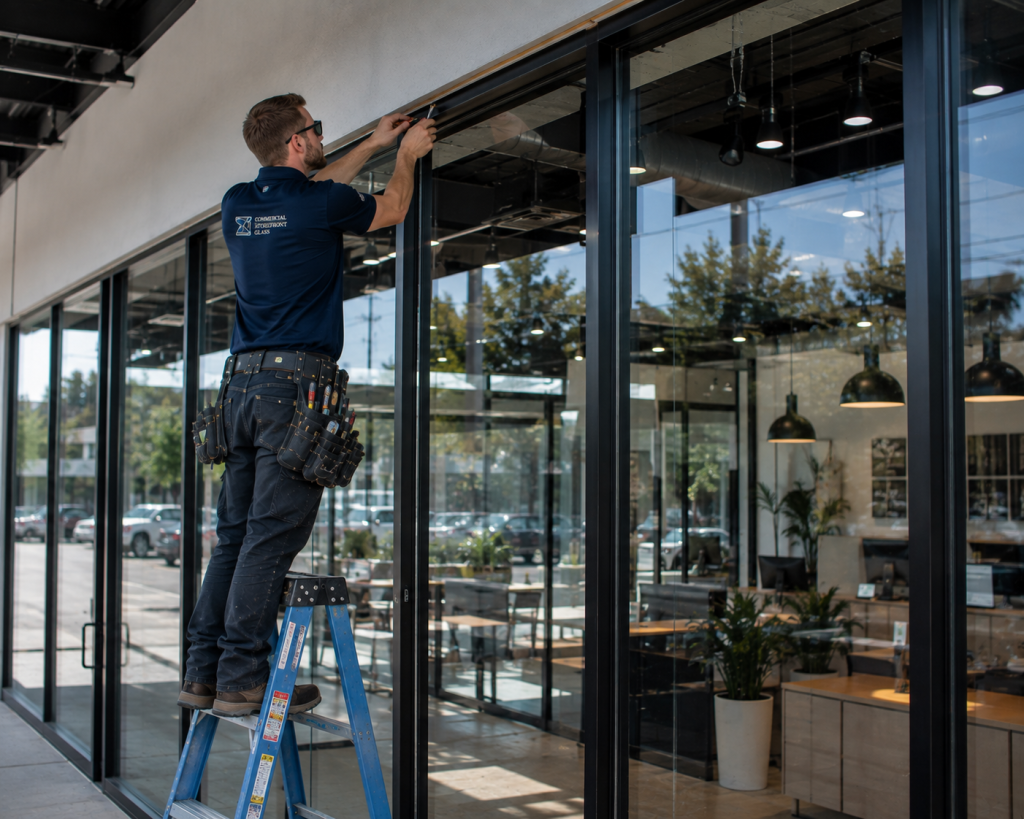
Survey Storefront Before Demolition
Before removing an existing storefront, evaluate:
- ✓ Aluminum framing
- ✓ Glass condition
- ✓ Insulated glass
- ✓ Entrance doors
- ✓ Closers
- ✓ Pivots
- ✓ Hinges
- ✓ Thresholds
- ✓ Weather seals
- ✓ Perimeter sealants
- ✓ Accessibility
- ✓ Security requirements
A large interior renovation does not automatically mean the exterior system has reached the end of its useful life.
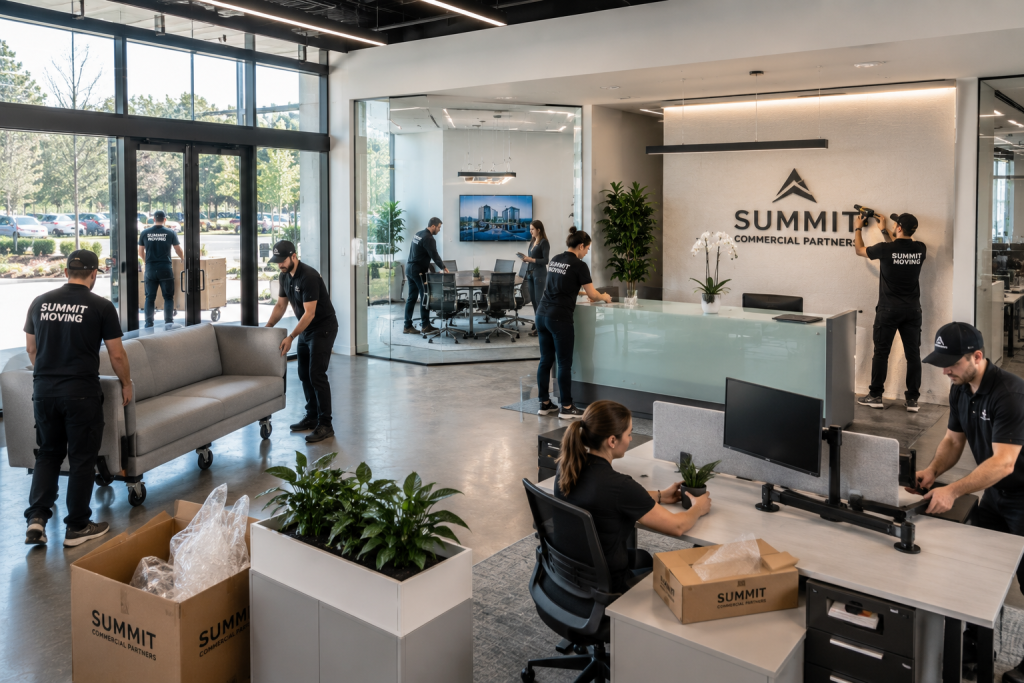
Component Failure vs Storefront System Failure
This distinction can preserve substantial TI capital.
One broken lite is a component problem.
One failed closer is a component problem.
A damaged door may be a component problem.
A few failed insulated glass units may still be a component problem.
But widespread conditions can indicate a broader system problem:
- Framing deterioration
- Water intrusion
- Glass failure
- Door problems
- Perimeter failure
- Major entrance changes
The glazing contractor should help the GC and owner determine which condition actually exists.
Dallas Retail Storefront Tenant Improvements
Dallas offers enormous volume in retail TI.
A new tenant may want to:
- Increase glass area
- Change entrance location
- Remove old branding
- Replace tinted glass
- Add security
- Upgrade doors
- Improve accessibility
- Modernize aluminum framing
Storefront decisions should occur early because they can interact with interior construction, electrical, signage, security, and accessibility.
Regional TI Glazing Contractors Overview
Denver to Dallas Commercial Glass & TI Markets
Dallas, OKC & Denver Storefront & TI Glazing
Colorado Springs, Fort Collins & SLC
Regional TI Glazing Contractors Overview TI Glass
Denver, SLC & Dallas Office Glass & TI Glazing
Dallas, OKC & Albuquerque Commercial Glass & TI
Colorado Regional TI Glazing Contractors
SLC vs Dallas: Class A Office Glass & TI
Colorado Springs vs Albuquerque Storefront & TI
Dallas vs Denver: Office Buildout & TI Glass
OKC vs Albuquerque Commercial Glass & TI
Fort Collins vs SLC Office Glass & TI Markets
Oklahoma City Retail Storefront Renovations
Oklahoma City’s opportunity can be especially attractive in established shopping centers.
A tenant may inherit a storefront that is fundamentally serviceable but visually dated.
A targeted modernization might include:
New Glass + Door Hardware + Film + Sealants + Updated Entrance
That leaves more TI budget available for the interior.
Denver Retail Storefront Repositioning
Denver adds the property-level repositioning angle.
An owner may renovate several storefronts simultaneously to improve an older commercial property.
Instead of one tenant project, the scope can become:
Façade → Storefront Bays → Entrances → Common Areas → Tenant Improvements
That creates a larger commercial glazing opportunity.
Restaurant Tenant Improvement Glass
Restaurants are strong TI candidates in all three markets.
Glass helps connect:
Traffic → Visibility → Activity → Atmosphere
Potential scopes include:
- Exterior storefront
- Entrance systems
- Vestibules
- Private dining glass
- Wine rooms
- Interior partitions
- Mirrors
- Patio glazing
- Operable glass systems
Dallas offers the largest absolute volume.
Oklahoma City provides strong regional restaurant and retail demand.
Denver combines restaurant TI with mixed-use, hospitality, and adaptive-reuse opportunities.

Office Tenant Improvement Glass
Office glazing extends well beyond storefront.
Typical applications include:
- Private office fronts
- Executive offices
- Conference rooms
- Boardrooms
- Huddle rooms
- Reception glazing
- Training spaces
- Glass corridors
- Interior entrances
This is where the three markets diverge considerably.
Dallas Office Buildout Glass
Dallas rewards scale.
A corporate TI might involve:
75 Office Fronts + 15 Conference Rooms + Boardroom + Reception + Multiple Controlled Entrances
At that point, glazing becomes a significant subcontractor package.
Standardization becomes extremely important.
Reducing unnecessary variation can simplify fabrication and installation:
- Glass thickness
- Door dimensions
- Framing
- Hardware
- Privacy treatments
- Oklahoma City Office TI Glass
Oklahoma City can reward flexibility.
A smaller professional-office project may require:
Reception + 8 Offices + 2 Conference Rooms + Entrance
The project isn’t enormous.
But it may be one of dozens performed by the same GC or property owner over several years.
Repeat relationships become particularly important.
Denver Office Repositioning Glass
Denver has a strong existing-office opportunity.
An older suite may contain:
- Existing glass offices
- Conference rooms
- Doors
- Reception glass
- Interior storefront
The new TI should begin by asking what can remain rather than what should be demolished.
That single question can change the glazing budget.
Existing Interior Glass Before Demolition
This principle applies across all three cities.
Inventory:
- Glass office fronts
- Conference-room panels
- Glass doors
- Sidelites
- Reception glazing
- Mirrors
- Interior storefront
The previous tenant’s lease ended.
The useful life of those materials may not have.
Reusing Tempered Glass in Tenant Improvements
Tempered glass generally cannot simply be field-cut to an entirely different size.
Reuse therefore needs to be planned.
The stronger sequence is:
Survey → Measure → New Floor Plan → Match Compatible Openings → Selective Demolition → New Fabrication
Perhaps only 15% or 20% of the existing glazing can be incorporated naturally.
That can still represent meaningful savings.
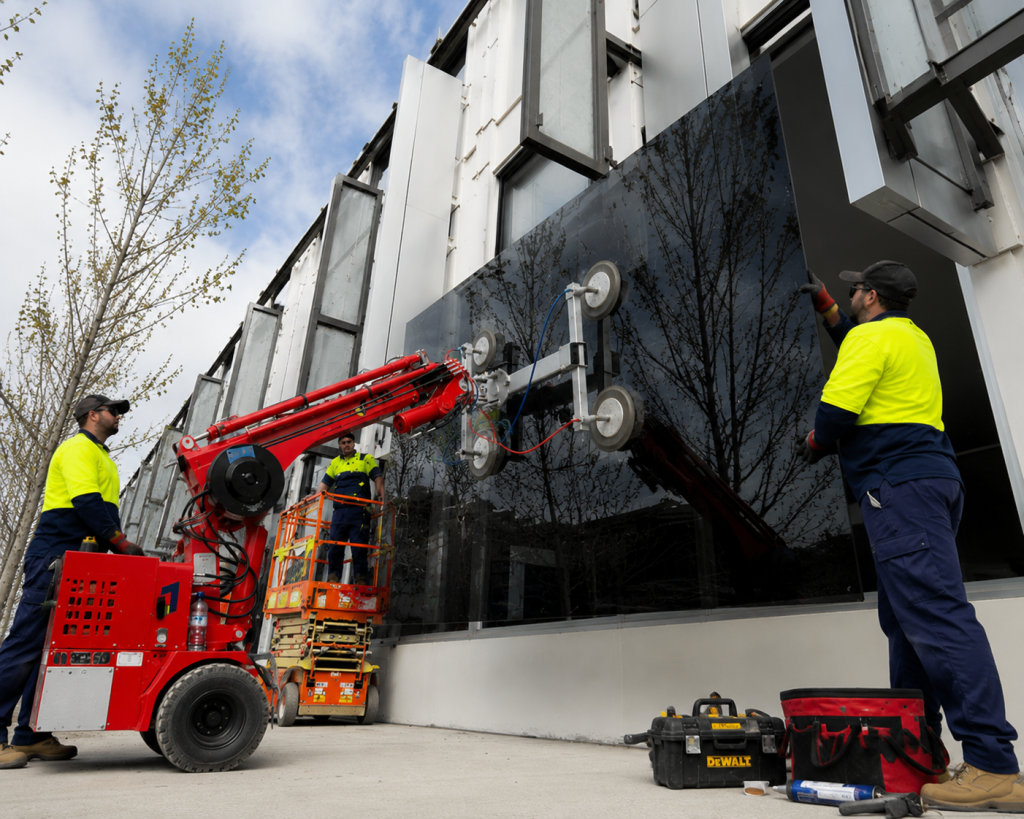
Dallas Existing Glass Strategy
Dallas provides an opportunity to turn reuse into a portfolio strategy.
Large owners managing multiple office buildings can potentially standardize:
Office Fronts + Doors + Conference Rooms + Hardware
That makes future reuse and replacement easier.
Oklahoma City Existing Glass Strategy
Oklahoma City can use reuse as practical TI value engineering.
An existing conference room may only need:
Privacy Film + New Door Hardware + Better Seals
That is often preferable to complete reconstruction.
Denver Existing Glass Strategy
Denver’s large second-generation office inventory makes this particularly compelling.
High-quality glazing left by a previous tenant may become an asset for the next buildout.
The key is identifying it before demolition destroys the opportunity.
Conference Room Glass & Acoustics
Conference rooms should be treated as complete assemblies:
Glass + Framing + Door + Hardware + Privacy + Acoustics
A visually impressive glass room can still fail operationally if every conversation can be heard outside.
Acoustic performance may depend on:
- Glass configuration
- Laminated glass
- Framing
- Door seals
- Perimeter conditions
- Ceiling construction
- Adjacent partitions
This becomes increasingly important in executive, legal, financial, medical, and corporate environments.
Interior Glass & Daylighting
Interior glass can also make better use of existing exterior glazing.
A traditional layout creates:
Exterior Window → Private Office → Drywall → Interior Workspace
A glass-front layout creates:
Exterior Window → Private Office → Glass → Interior Workspace
No exterior windows were added.
But natural light can travel farther into the floor plate.
For Denver repositioning projects, this can help an older office feel substantially newer.
For Dallas Class A TI, it can support premium workplace design.
For Oklahoma City renovations, it can modernize existing suites without altering the exterior envelope.
Privacy Glass & Film
Not every office should be completely transparent.
Privacy may be required for:
- Executive offices
- HR
- Finance
- Legal
- Medical consultations
- Boardrooms
Options can include:
Frosted Film → Gradient Film → Decorative Glass → Laminated Glass → Switchable Privacy
Film is especially useful when existing glass is otherwise serviceable.
Medical Office Tenant Improvement Glazing
Healthcare creates strong demand across Dallas, Oklahoma City, and Denver.
Potential applications include:
- Commercial entrances
- Automatic operators
- Reception glazing
- Administrative offices
- Conference rooms
- Staff areas
- Privacy glass
- Interior doors
Medical glazing needs to balance:
Visibility + Privacy + Safety + Accessibility + Cleaning
A conventional corporate-office specification should not automatically be applied to healthcare environments.
Industrial Tenant Improvement Glass
All three markets have meaningful industrial sectors.
That creates one of the most overlooked glazing categories in warehouse office buildouts.
A 200,000-square-foot industrial building may contain only 15,000 square feet of office.
But those 15,000 square feet can require:
Storefront → Entrance → Reception → Offices → Conference Rooms → Training → Operations Glass
The smallest portion of the building can contain most of its architectural glazing.
Dallas Industrial TI Glass
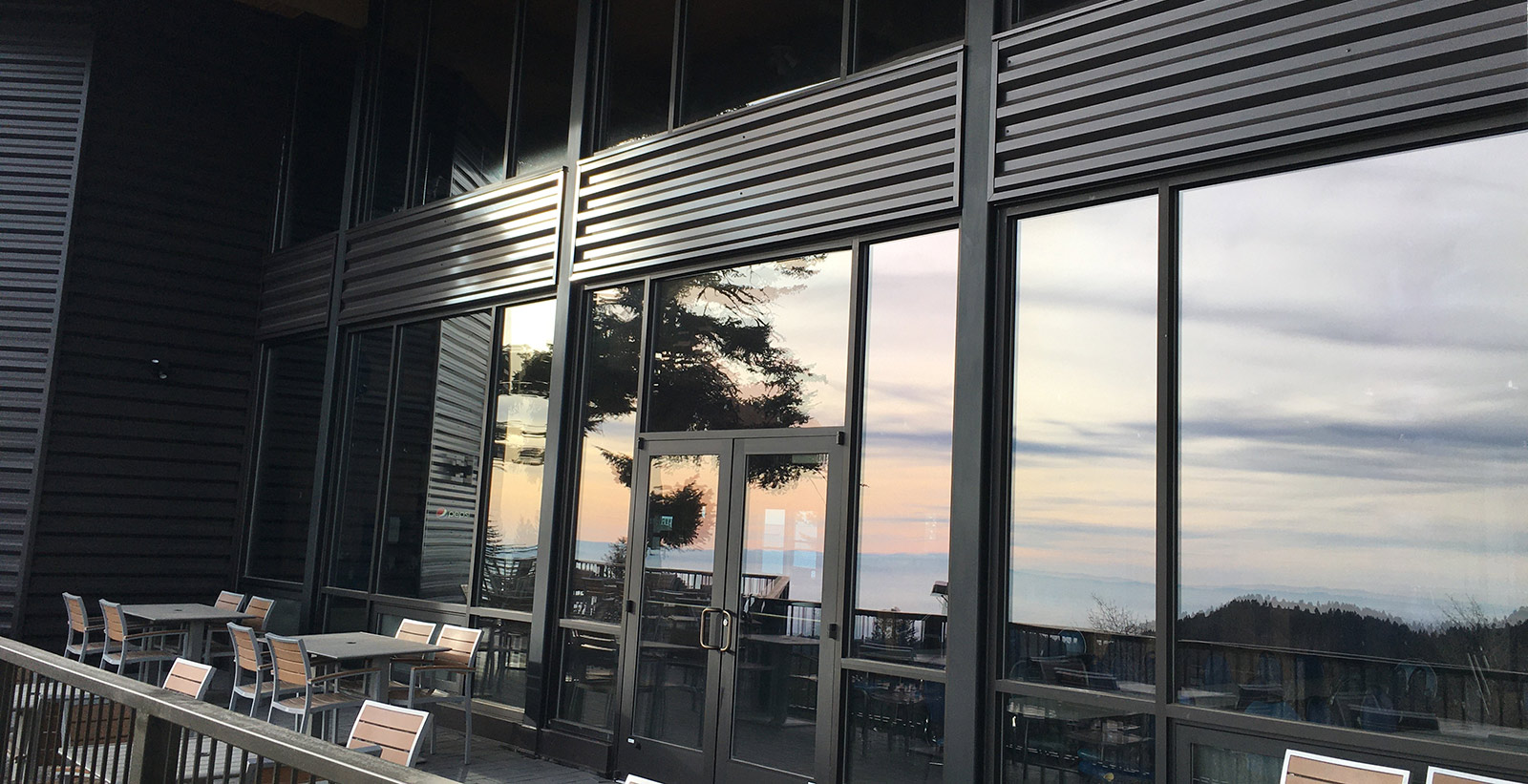
Dallas wins on sheer scale.
Distribution, logistics, manufacturing, flex, and industrial campuses create repeated office buildout opportunities.
Large portfolio owners can potentially standardize glazing across multiple facilities.
Oklahoma City Industrial TI Glass
Oklahoma City combines:
Energy + Manufacturing + Logistics + Distribution + Regional Industrial
The opportunity often sits at the transition between administrative and operational areas.
Glass may provide visibility between office and operations while maintaining physical separation.
Denver Industrial TI Glass
Denver adds substantial warehouse, distribution, manufacturing, and flex inventory.
Industrial tenant turnover can create both new office buildouts and reconfiguration of existing administrative space.
That makes interior office glazing relevant even where the building exterior contains relatively little glass.
Commercial Entrance Systems
Storefront and entrance are related but should not be treated as identical.
A complete commercial entrance may involve:
- Aluminum doors
- Glass doors
- Sidelites
- Transoms
- Closers
- Continuous hinges
- Pivots
- Panic hardware
- Automatic operators
- Electrified hardware
The entrance is an operating building system.
Its performance matters every day after the TI contractor leaves.
Access Control & Commercial Glass Doors
Modern tenant improvements increasingly incorporate electronic access.
That creates a coordination chain:
Glazing Contractor → TI Contractor → Hardware → Electrical → Security Integrator
Potential components include:
- Card readers
- Electric strikes
- Magnetic locks
- Door-position sensors
- Request-to-exit devices
- Automatic operators
These requirements need to be resolved before fabrication.
A late access-control decision can become a very expensive door-and-framing problem.
Spec Suite Glazing
Spec suites create repeatable glazing opportunities.
A landlord may install:
- ✓ Glass office fronts
- ✓ Conference rooms
- ✓ Reception glass
- ✓ Glass doors
- ✓ Privacy treatments
That work can be completed before the final tenant signs.
Dallas provides enormous scale for standardized spec-suite programs.
Denver’s competitive existing-office market creates strong reasons to improve vacant suites.
Oklahoma City can use finished suites to differentiate established commercial properties.
Commercial Building Repositioning
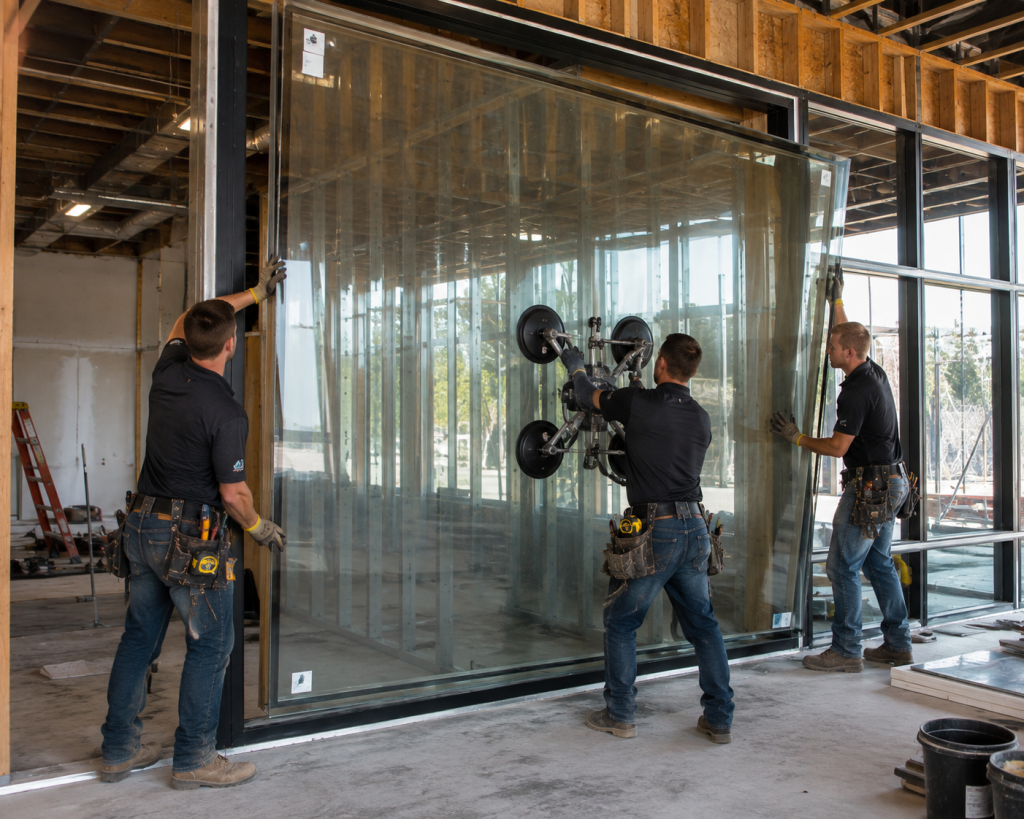
Tenant improvement glass can also be part of a larger property strategy.
Consider:
Old Building → Entrance Modernization → Lobby Renovation → Spec Suites → Tenant Glass → Improved Leasing Position
The glazing contractor can participate in several stages.
This is particularly relevant in Denver but also applies to aging commercial properties throughout Dallas and Oklahoma City.
Failed IGUs During Tenant Improvements
A newly renovated commercial space can still feel old if exterior insulated glass is visibly fogged.
Before the tenant opens, inspect for:
- Condensation between panes
- Cloudiness
- Failed seals
- Cracked glass
- Damaged exterior sealants
If framing remains serviceable, selective IGU replacement may improve appearance without requiring a complete storefront system.
Commercial Glass Value Engineering
The strongest question isn’t how to make the glass cheaper.
It is where glass creates enough value to justify the investment.
Entrance
Visibility, accessibility, security, operation.
Reception
First architectural impression.
Conference Rooms
High visibility and frequent use.
Perimeter Offices
Daylight transfer.
Executive Areas
Privacy, acoustics, presentation.
Storefront
Visibility, weather protection, customer experience.
Then secondary areas can be evaluated more aggressively.
Dallas TI Glazing Strategy
Dallas rewards:
Standardize → Fabricate → Scale → Repeat
Large projects benefit from reducing unnecessary variation.
Oklahoma City TI Glazing Strategy
Oklahoma City rewards:
Assess → Repair → Modernize → Build Relationships → Repeat
The ability to handle both small and larger TI scopes can create recurring GC and property-management relationships.
Denver TI Glazing Strategy
Denver rewards:
Survey → Preserve → Retrofit → Reposition
Existing glass should be treated as a potential asset before demolition.
Tenant Improvement Glass Scheduling
All three markets share the same problem.
Glass is installed late but must be coordinated early.
A simplified sequence is:
Design → Framing → Drywall → Finished Openings → Field Measure → Fabrication → Installation → Hardware → Punch
A delay in framing can become a delay in field measurement.
A delay in measurement becomes a delay in fabrication.
Then glass becomes one of the last remaining obstacles to occupancy.
General contractors should track the glass release date, not simply the glass installation date.
Storefront Scheduling Is Different
Exterior storefront may need to occur much earlier than interior glass.
That means the glazing contractor can have multiple timelines on one TI:
Exterior Storefront → Entrance → Interior Glass → Doors & Hardware → Punch
Treating all glazing as one late-stage scope can create scheduling problems.
Dallas, Oklahoma City & Denver — Three Commercial Glazing Markets
Dallas provides exceptional opportunities across:
Corporate TI + Retail + Industrial + Healthcare + Class A Office + Multi-Property Programs
The competitive advantage is capacity and repeatability.
Oklahoma City — Best for Recurring Regional TI
Oklahoma City offers a strong combination of:
Healthcare + Energy + Office + Retail + Industrial + Existing Commercial Properties
The competitive advantage is versatility and repeat relationships.
Denver — Best for Repositioning & Modernization
Denver combines:
Existing Office Inventory + Class A Competition + Industrial + Retail + Adaptive Reuse + Building Repositioning
The competitive advantage is understanding existing conditions and determining what should be repaired, preserved, modified, or replaced.
Dallas, Oklahoma City & Denver — One Commercial Storefront & TI Glazing Strategy
The markets ultimately create three different commercial-glass engines.
Dallas
Growth → Leasing → Large Buildout → Standardized Commercial Glazing
Oklahoma City
Tenant Turnover → Existing Space → Renovation → Storefront & TI Glass
Denver
Existing Property → Competition → Repositioning → Modernized Commercial Glass
For commercial storefront contractors, tenant improvement glazing contractors, general contractors, developers, property owners, architects, and facility managers, the strongest process remains consistent:
Survey Existing Storefront & Interior Glass → Determine Component vs System Failure → Preserve What Has Value → Coordinate Entrances & Access Control Early → Design Interior Glass Around the Tenant → Standardize Repeating Openings → Release Fabrication Before It Threatens Occupancy
The real opportunity is bigger than glass replacement. It is positioning commercial glazing as part of the tenant improvement, leasing, modernization, and long-term property strategy from the beginning of the project.